

From "cost-performance competition" to "IP innovation breakthrough", the form of stationery products has broken through the traditional boundaries
Publish Time:2025-12-10 15:20:01Pageviews:301


abstract: Nowadays, domestic stationery products are no longer the monotonous "old three items" in our memory. It can be a notebook of the flying apsaras from Dunhuang, or a blind box pen full of surprises. From "making do" to "emphasizing practicality", from "Made in China" to "Created in China", within the small space of a desk, as the brush and ink flow, domestic stationery products are writing the life aesthetics of this era with their unique warmth and ingenuity.
A gel pen printed with characters from domestic animations, which costs three times as much as an ordinary pen, can sell out during the back-to-school season. A smart notebook, which often costs several hundred yuan, has become the new favorite for learning among Generation Z.
As the dividend of scale gradually fades away, value reconstruction is becoming the key to the transformation and sustainable development of the stationery industry.
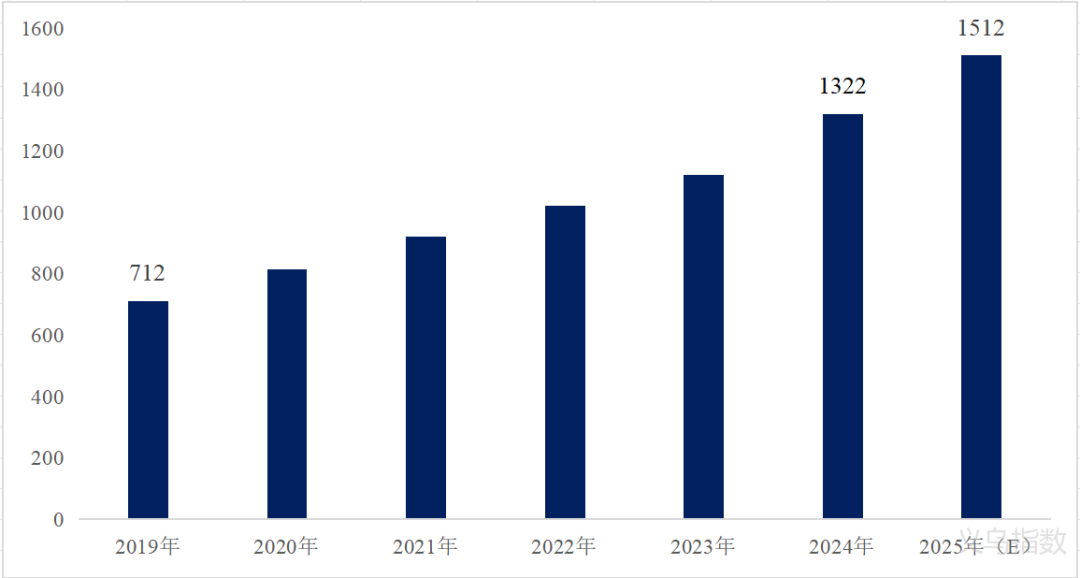
The market size of China's stationery industry was approximately 132.2 billion yuan in 2024 and is expected to exceed 150 billion yuan by 2025.
In 2024, the cumulative export value of educational, cultural and office supplies from China reached 38.475 billion US dollars, accounting for approximately 30% of the global total. On average, over 70,000 US dollars worth of "Made in China" stationery was sold overseas every minute.
This article from Yiwu Index will help you understand the stationery industry.

01
Small stationery, big market
The stationery industry is a typical case of "small products, big market", and its market size has been continuously rising in recent years. According to the data monitoring of Yiwu Index, the market size of China's stationery industry has grown from 71.2 billion yuan in 2019 to 132.2 billion yuan in 2024. It is expected that the market size of China's stationery industry will exceed 150 billion yuan in 2025.
The market size of China's stationery industry from 2019 to 2025 (Unit: 100 million yuan)
Data source: China Industrial Statistical Yearbook "Preview
www.ywindex.com
(1) Why has the stationery industry remained popular for so long?
The consumer group of stationery in China is huge, mainly consisting of about 300 million students and about 100 million office workers. As an essential item in educational and office scenarios, the stationery industry has long been in a steady growth trend. The reasons mainly include the following aspects:
First, the increase in residents' income levels has driven the upgrading of stationery consumption. Nowadays, Generation Z and those born in the 2010s have become the main consumers of stationery. Consumers pay more attention to the appearance, cultural connotation and social attributes of products, and are willing to pay for mid-to-high-end stationery with added value. Meanwhile, the continuous growth of residents' income has driven up consumers' spending on stationery. Take writing tools as an example. According to the data from the Yiwu Index, it is estimated that the per capita consumption and usage of writing tools in China will be approximately 3.1 US dollars and 12 pieces respectively in 2024. Compared with 12 US dollars and 26 pieces in the United States and 8 US dollars and 19 pieces in Japan, there is still considerable growth potential in the future.
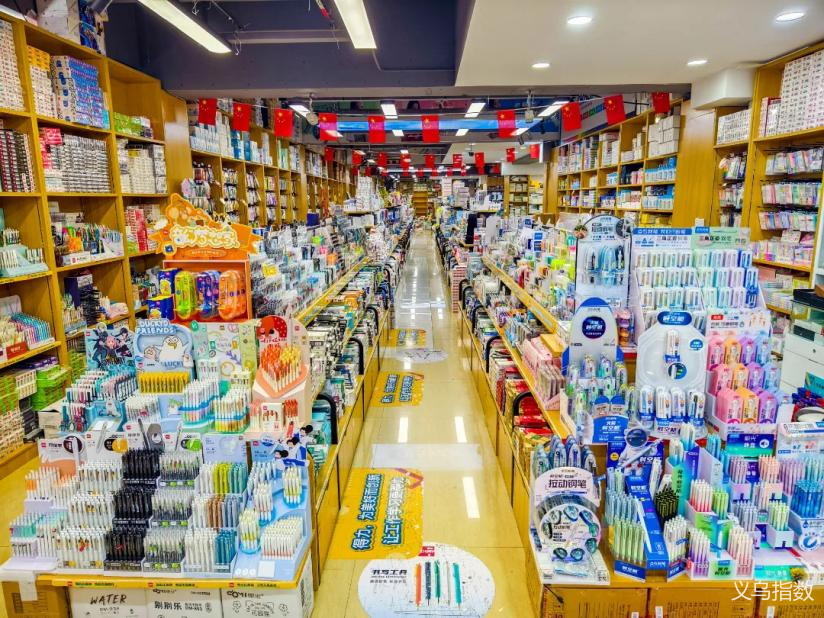
Image source: Yiwu Index. Large stationery collection store
The second is the continuous investment of the state in education. Students, as the main consumer group, provide a large and stable user base and market increment for the stationery market. On the one hand, in 2024, the national general public budget expenditure on education reached 4.21 trillion yuan, increasing by 2% year-on-year. The state has been continuously increasing its investment in education, directly driving the market demand for student stationery. On the other hand, although the number of newborns is on a downward trend, under the "universal two-child" policy, the "baby boom" group born between 2016 and 2018 began to enter the primary school stage in 2022, stabilizing the size of the school-age population and providing a relatively stable demand foundation for the stationery market during this period.

The stationery store was packed with people during the back-to-school season. Image source: Internet
Third, there is a large export space in overseas markets. China is one of the world's largest exporters of stationery, accounting for approximately 30% of the global total exports of office stationery. Emerging markets represented by countries such as Indonesia and Vietnam have maintained a rapid growth trend in demand for stationery products due to reasons such as a younger population and continuous increase in educational investment. Vice President Wu of the Yiwu Stationery Industry Association said, "This year, the global stationery industry has been doing well, especially in the Southeast Asian market. There is a strong demand for stationery products with high cost performance and novel designs, and the order volume has seen explosive growth." The growth of foreign exports has driven the steady increase in the output value scale of the domestic stationery industry.
(2) Upstream manufacturing enterprises: The southern coastal areas are dominant
The distribution of stationery manufacturing enterprises in China shows the characteristics of "more along the coast, fewer in the inland areas, more in the south and fewer in the north". Among them, Zhejiang Province is the province with the most stationery enterprises. As of March 2024, the number of stationery industry-related enterprises in Zhejiang exceeded 7,000.
The upstream of the stationery industry mainly consists of suppliers of raw materials such as plastic, ink and paper, as well as molds, and the distribution pattern is relatively scattered. Midstream manufacturing is the core link, presenting a pattern of "strong brand + strong manufacturing". Enterprises are concentrated in the Yangtze River Delta and Pearl River Delta regions, forming industrial clusters represented by Ningbo/Wenzhou in Zhejiang Province and Shenzhen/Dongguan in Guangdong Province. In addition to leading brand groups such as Chenguang, Deli and Qixin, there are also a large number of "hidden champions" and export contract manufacturing enterprises that focus on niche categories (such as pencils and file folders). The downstream channels are composed of brand direct sales, large distributors, online e-commerce and offline retail, and the trend of digital integration of channels is obvious.
02
From the Four Treasures of the study to national trendy toys
Traditional Chinese stationery refers to the four treasures of the study - "pen, ink, paper and inkstone". With the increasingly diversified consumer demands, consumers' purchase of stationery is no longer merely satisfied with "usability", but rather pursues "practicality", "attractiveness" and "fun". This has promoted the diversified development of stationery product categories.
At present, the product categories in the stationery industry are mainly divided into four major categories:
Office stationery: folders, reference books, staplers, paper clips, solid glue, office notebooks and other stationery used in office scenarios;
Writing stationery: gel pens, fountain pens, pencils, watercolor pens, markers, brushes and other stationery used for writing;
Student stationery: stationery boxes, pencil cases, notebooks, erasers, rulers, schoolbags, colored clay and other stationery that meet students' needs;
Other educational and stationery supplies: calculators, desk lamps, projectors, blackboards, whiteboards, chalk, erasers, teaching models and other tools to assist in learning and office work.
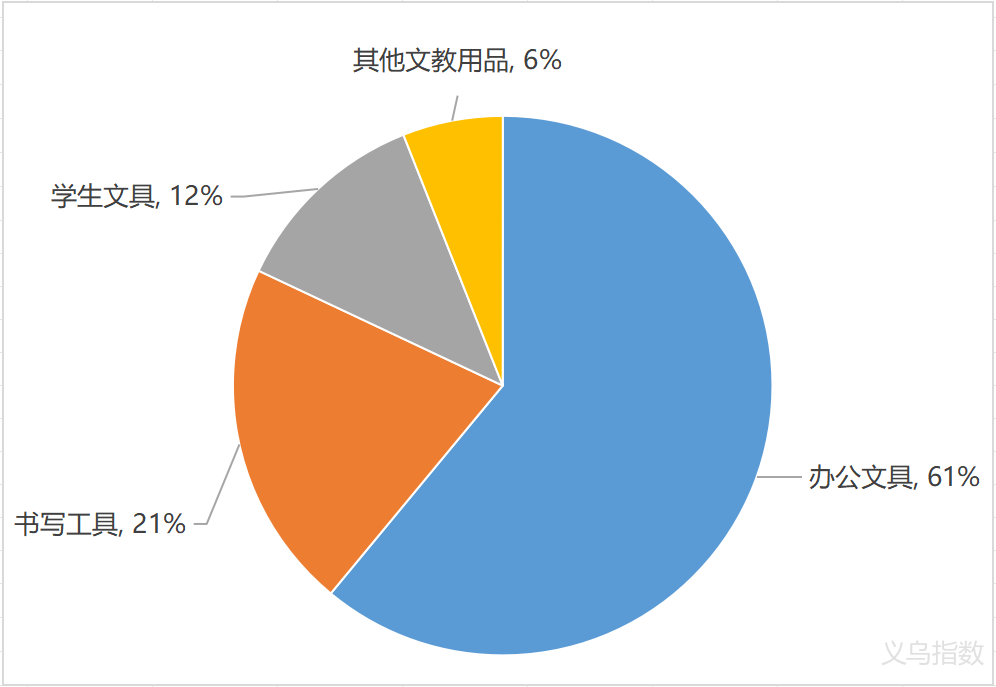
From the perspective of market share in the sub-categories, the market shares of the four major categories of office stationery, writing tools, student stationery and other educational and cultural supplies are 61%, 21%, 12% and 6% respectively.
The market share of each category in the stationery industry
Data source: Zhiyan Consulting
www.ywindex.com
(1) Domestic market: IPization and innovation
As a traditional category, for stationery to seek new growth points, the primary goal of enterprises is to enhance the added value of products and accelerate product and technological innovation. The vice president of Yiwu Cultural Products Industry Association said, "The current Generation Z and those born in the 2010s are the main consumers in the stationery market. They are willing to purchase stationery products that can evoke their emotional resonance."
Trend One: IP Empowerment, a new growth engine for the Stationery Industry
IP has become one of the most core growth engines in the stationery industry. In recent years, stationery products have shown a "grain-like" feature, essentially catering to the trend of young consumers' "self-pleasing" consumption. Data shows that the market size growth rate of IP-branded stationery far exceeds that of ordinary stationery, and it is expected that the compound annual growth rate will remain high in the next five years. When new co-branded products of popular ips (such as well-known anime, game, and cultural and creative ips) and stationery products are launched for the first time, the phenomenon of "instant sell-out" often occurs. IP collaborations have expanded the consumption scenarios of stationery from essential consumption for study and office work to daily collectible consumption, opening up new growth space for the industry.

Stationery shops in Zone 3 of Yiwu International Trade City. Image source: Yiwu Index
Trend Two: Practical and fun, stationery product forms break through traditional boundaries
Innovation in the stationery industry is constantly breaking through traditional boundaries. The first is the upgrade of product form. Students and young consumer groups prefer products that are well-designed, novel and bright. While going beyond practical features, stationery can also become interesting and fun little toys. Products that combine fun and functionality, such as limited edition blind box pens, carrot stress-relieving pinching books, and butter bear "plush books", are highly favored by students. The second is the expansion of product categories and scenarios. Stationery enterprises are constantly enriching their product matrices, deeply integrating stationery products into diverse scenarios such as diaries, paintings, gifts, collectibles of trendy toys, and desktop aesthetics. From professional painting tools, high-appearance-level storage products to atmospheric stationery that integrates fragrance and lighting functions, an endless stream of products have emerged, opening up an innovative direction for stationery products.
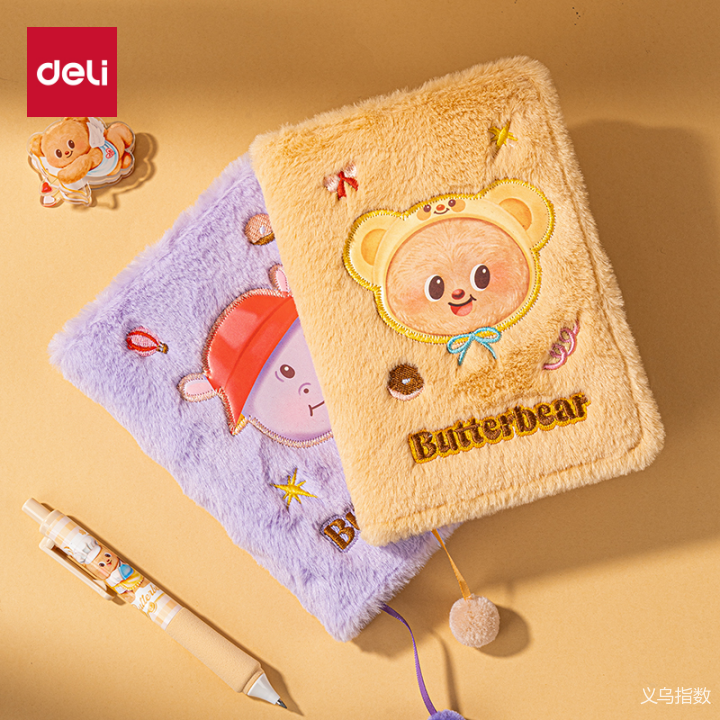
The plush book co-branded by Deli and Butter Bear cartoon IP. Image source: Deli's official account
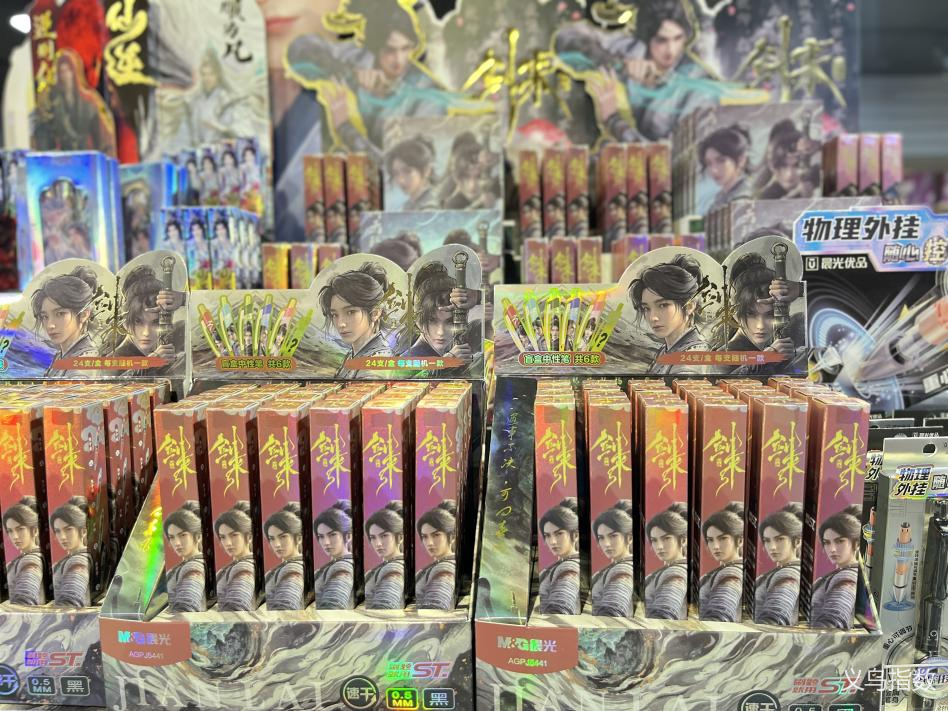
The blind box gel pen co-branded by Chenguang and domestic animation. Image source: Yiwu Index
(2) Overseas markets: Developed regions lead in scale, while emerging markets are experiencing strong growth
Data shows that the global stationery market size was approximately 159 billion US dollars in 2024. It is expected to maintain a stable growth trend in the coming years and increase to 213.1 billion US dollars by 2030 at a compound annual growth rate of 5%.
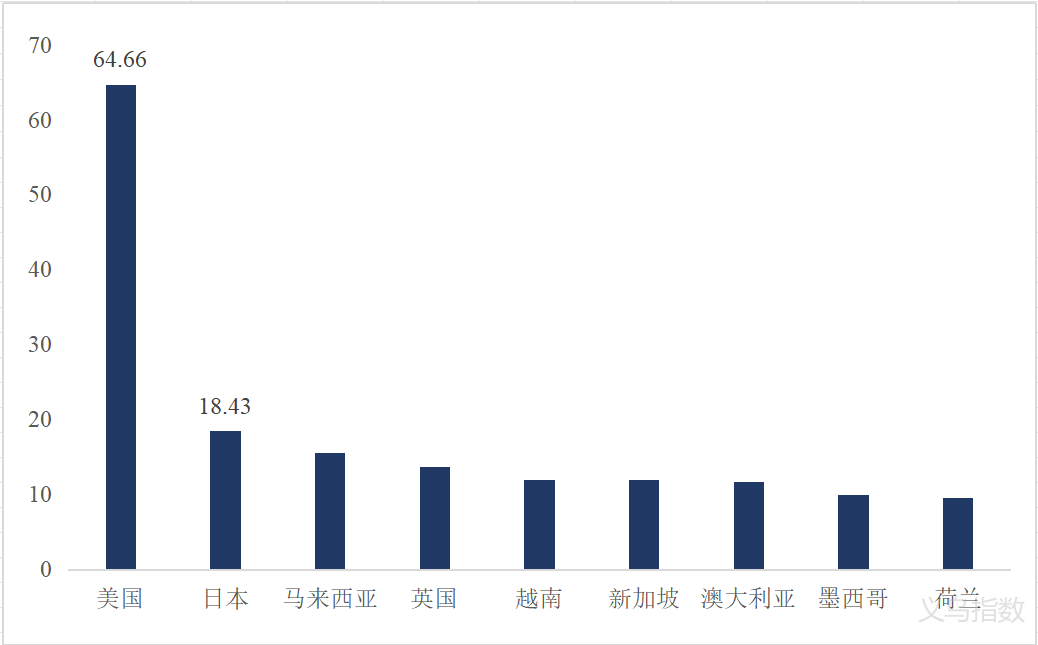
From the perspective of China's export of cultural, educational and office supplies, Asia-Pacific, Europe and North America are the main export markets. In 2024, China's exports of educational and office supplies reached approximately 38.5 billion US dollars, with the United States, Japan, Malaysia and other countries being the main export destinations.
China's Cultural, Educational and Office Supplies Export situation in 2024 (Unit: 100 million US dollars)
Data source: Chinese Customs
www.ywindex.com
From the perspective of market performance in major regions around the world:
The European region will account for approximately 32% of the global stationery market share in 2024, with a market size of about 47 billion US dollars. Among them, Germany is the largest stationery market in Europe, and it is expected that the market size will grow to 11.8 billion US dollars by 2030. European consumers prefer stationery products made of renewable materials and with low-carbon packaging, and they have a strong brand awareness.
The Asia-Pacific region is currently one of the fastest-growing stationery consumption markets, accounting for approximately 28% of the global stationery market share in 2024. It is projected that the market size will grow to 82.766 billion US dollars by 2030. Among them, consumption growth in Southeast Asia is particularly rapid, and consumers prefer basic learning stationery with good cost performance.
The North American market will account for approximately 27% of the global stationery market share in 2024, with a market size of about 39.455 billion US dollars. It is expected to grow to 52.511 billion US dollars by 2030, with an average annual compound growth rate of about 4.88%. In terms of consumption preferences, North American users tend to choose products that have clear structures, are easy to categorize, and are portable and efficient, such as multi-functional laptops, file storage holders, and quick-drying signature pens.
Emerging markets such as Latin America, the Middle East and Africa have huge development potential. Data shows that the compound annual growth rate of the Latin American market in the next five years will exceed 7%. Among them, Brazil and Argentina are important growth poles. Due to reasons such as a large population base, a high proportion of young people, and increasing investment in education, the African market has a strong demand for stationery. It is expected that the market size will exceed 4 billion US dollars by 2027. Nigeria, Uganda and Zimbabwe are the main importers of Chinese stationery products in Africa.

African purchasers inspect the stationery market in Yiwu. Source: Yiwu Index
03
Yiwu Stationery: From "Manufacturing" to "Creation"
The stationery industry in Yiwu started in the 1980s and is one of the earliest industries to develop in the market. After more than 40 years of development, it has become one of the pillar industries in the Yiwu market. From January to July this year, Yiwu City exported stationery products worth 410 million yuan, an increase of 12.3%.
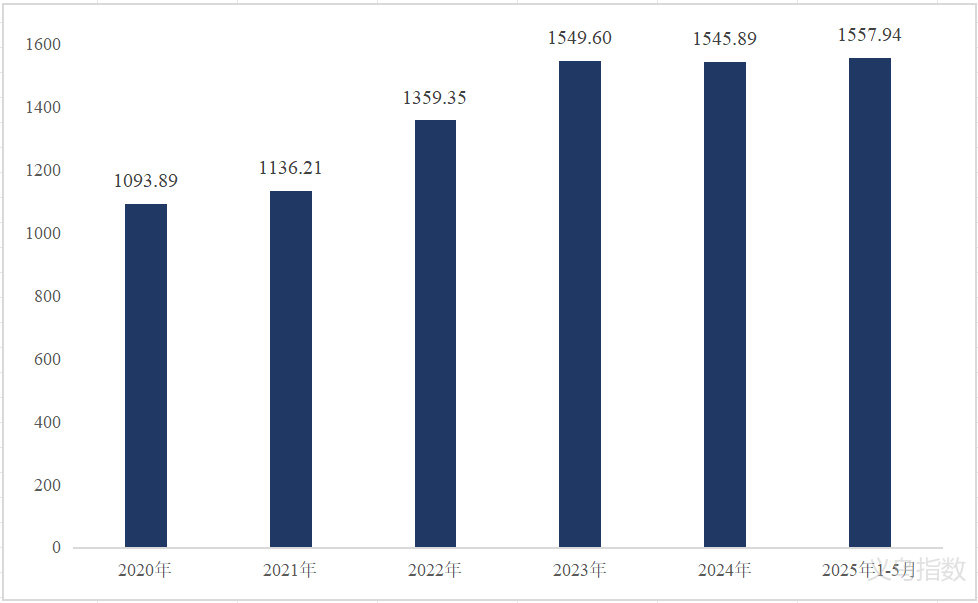
According to the data from Yiwu Index, from 2020 to 2024, the average prosperity index of cultural and office supplies in Yiwu rose from 1,093.89 points to 1,545.89 points, an increase of 41.32%. In the first five months of 2025, the average prosperity index of cultural and office supplies was 1,557.94 points.
The prosperity index of cultural office supplies in Yiwu from 2020 to 2025
Data source: Yiwu Index
www.ywindex.com
From the perspective of the prosperity index of the sub-categories of cultural office supplies, all have shown a rapid growth trend. Among them, the prosperity index of stationery and educational supplies has grown the fastest. Since 2020, the average prosperity index has been rising year by year, from 1,057.92 points in 2020 to 1,887.57 points in 2024, with an increase of 78.42% compared to 2020. The average prosperity index in the first five months of 2025 reached 1,972.25 points.
The prosperity index of cultural office supplies subcategories from 2020 to 2025

Data source: Yiwu Index
www.ywindex.com
(1) Yiwu Stationery: Thousands of merchants gather, goods reach the world
The stationery industry merchants in Yiwu Market are mainly distributed in the first and second floors of the International Trade City Zone 3 Market and other areas. Currently, there are over 1,500 business stalls and nearly 1,400 business entities in the market. The main product categories include student stationery, office supplies, cultural and creative trendy toys, art supplies and other stationery products, etc.
From the perspective of product sales, the ratio of domestic and foreign trade sales is approximately 3:7. The main export destinations are the Middle East, Europe, America, Southeast Asia and other countries and regions. Domestic sales cover the entire country, with the Yangtze River Delta region, the Pearl River Delta region, and provinces such as Henan, Sichuan, and Hubei being the majority.
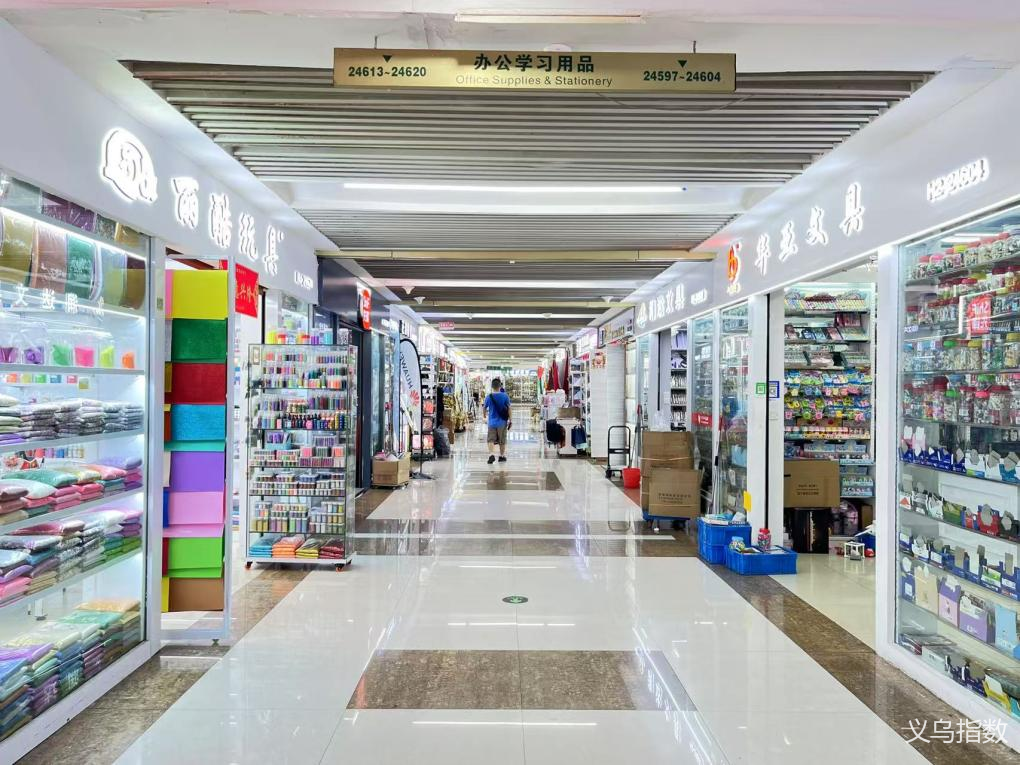
Market map of stationery industry in Zone 3 of Yiwu International Trade City Source: Yiwu Index
(2) Quality +IP+ Going Global: The Business Philosophy of Yiwu's Stationery Industry
Quality advancement. A stationery business owner in the third zone of Yiwu International Trade City said, "Currently, in Yiwu's stationery market, the volume of mid-to-high-end stationery products is very large, and there are also many high-end stationery products exported to developed countries and regions such as Europe and America." In the past, Yiwu stationery was renowned for its low prices and wide variety. Nowadays, driven by both the upgrading of consumption and market competition, product quality has become a core element for the development of the industry. More and more stationery enterprises in Yiwu are increasing their investment in research and development, comprehensively enhancing product quality from material selection, design innovation to production process improvement. Meanwhile, stationery enterprises in Yiwu have been actively promoting brand transformation, giving rise to a number of self-owned brands with market competitiveness, such as "Dingli" and "Mikailun", whose products are exported to overseas markets like Europe and America.
IP collaboration. Yiwu stationery enterprises have diverse types of cooperative ips. Besides international classic ips like Disney, they also delve into local culture and collaborate with ips of national trend culture. For instance, the Yiwu Cultural Products Industry Association has launched the local IP character "Bobo Goose", whose design inspiration comes from the poem "Ode to a Goose" by Yiwu poet Luo Binwang. Member enterprises of the association can incorporate it into their product designs for free. By integrating China's unique cultural connotations, it has attracted many domestic and foreign buyers to purchase.
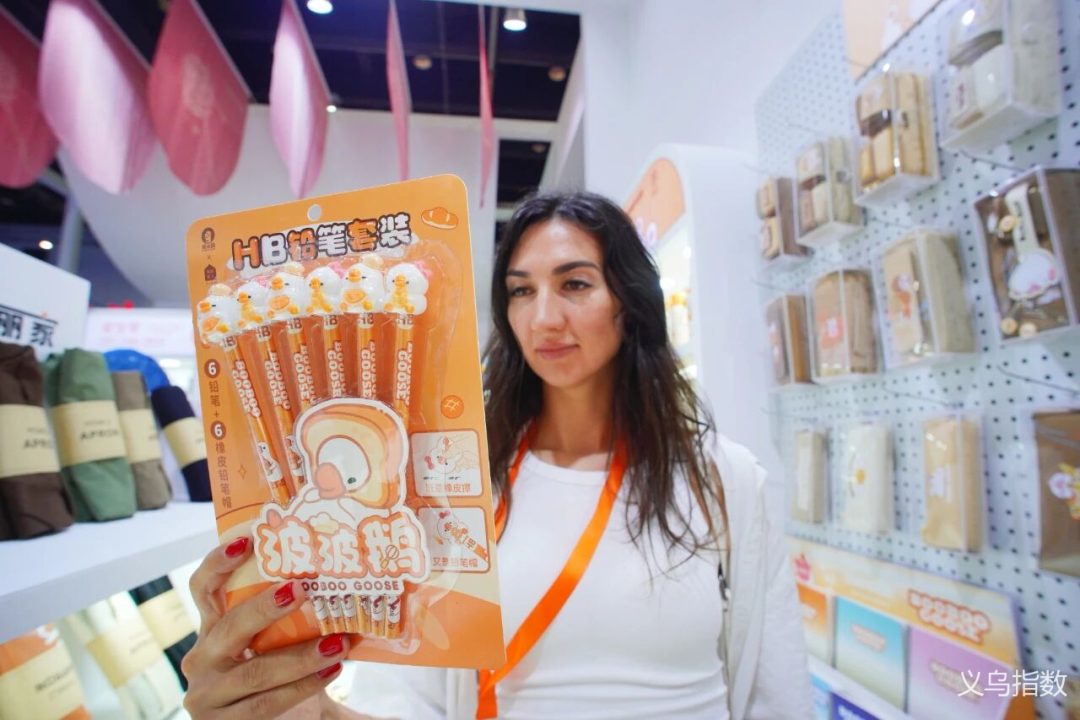
The image source of the original IP "Bobo Goose" series of stationery products from Yiwu: Yiwu Release
Actively go global to expand into new markets. The stationery industry in Yiwu has an outward orientation of up to 70%, and the overseas market is an important growth pole. In recent years, stationery enterprises in Yiwu have been actively venturing overseas. By participating in various domestic and international exhibitions, exploring cross-border e-commerce sales channels, and setting up overseas warehouses, they have continuously reached global consumers and expanded their overseas markets. Vice President Wu of the Yiwu Stationery Industry Association said, "We participate in various stationery exhibitions every year, such as the Yiwu Stationery and Gift Exhibition and the Thailand Stationery Exhibition, which is of great help to our products going global." Meanwhile, we also plan to enhance the company's supply chain response capabilities and market share in Southeast Asia by establishing overseas warehouses in countries such as Vietnam.

Image source: CCTV Finance, 2025 China Yiwu Stationery and Gift Exhibition
Conclusion
Nowadays, domestic stationery products are no longer the monotonous "old three items" in our memory. It can be a notebook of the flying apsaras from Dunhuang, or a blind box pen full of surprises. From "making do" to "emphasizing practicality", from "Made in China" to "Created in China", within the small space of a desk, as the brush and ink flow, domestic stationery products are writing the life aesthetics of this era with their unique warmth and ingenuity.
—— The content of this article is translated by Al ——
 My favorites