

From winning by lying down to breaking the deadlock, how do bedding products compete for young people's "sleep sovereignty"?
Publish Time:2025-12-10 15:06:20Pageviews:194


abstract: From a "price war" to a "value war", the bedding industry in Yiwu is undergoing a critical stage of transformation and upgrading. Through the tempering of market competition, it is gradually moving towards quality, branding and fashion.
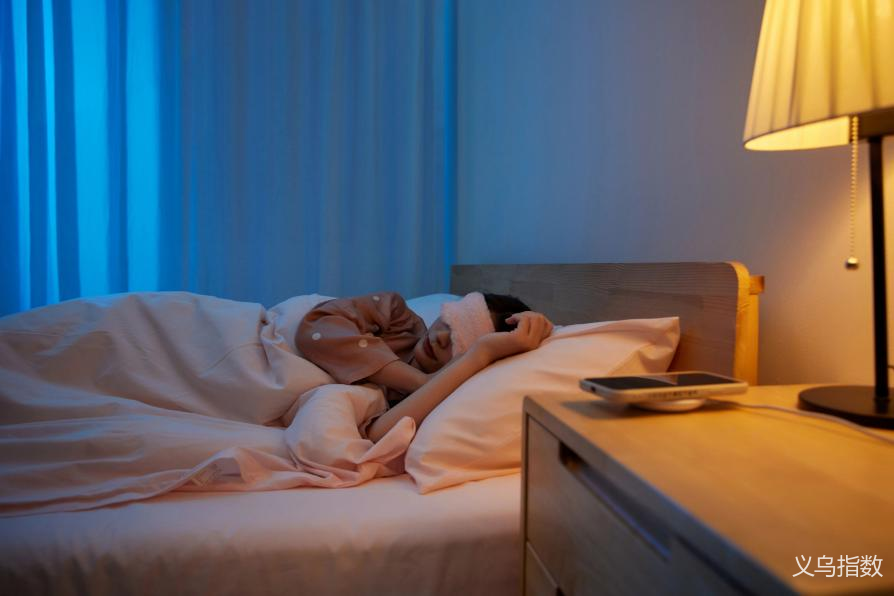
Light the scented candle, straighten the latex pillow, and put on the steam eye mask... A series of proficient bedtime rituals have become a compulsory course for countless insomniacs to fall asleep.
This group of "extremely poor students" who have trouble sleeping, can't sleep or don't get enough sleep are highlighting the huge potential of the bedding market.
The market size of China's bedding industry reached 200 billion yuan in 2024 and is expected to exceed 225 billion yuan in 2025.
In 2024, China's bedding export value reached 15.4 billion US dollars, representing a year-on-year growth of 6%.
In this article, Yiwu Index will take you to understand the bedding industry.
01
A market worth hundreds of billions generated by 500 million people suffering from anxiety and insomnia
As a core category of home consumption, the market size of bedding products has been continuously growing in recent years. According to the data monitoring of Yiwu Index, the market size of China's bedding industry will reach 200 billion yuan in 2024, with an increase of as high as 90.5% compared to 2020.
The market size of China's bedding industry from 2020 to 2025 (in billions of yuan)

Data source: Yiwu Index
www.ywindex.com
The market size of the bedding industry continues to expand, mainly driven by the following two reasons:
A must-have for insomniacs, paying for "having a good night's sleep"
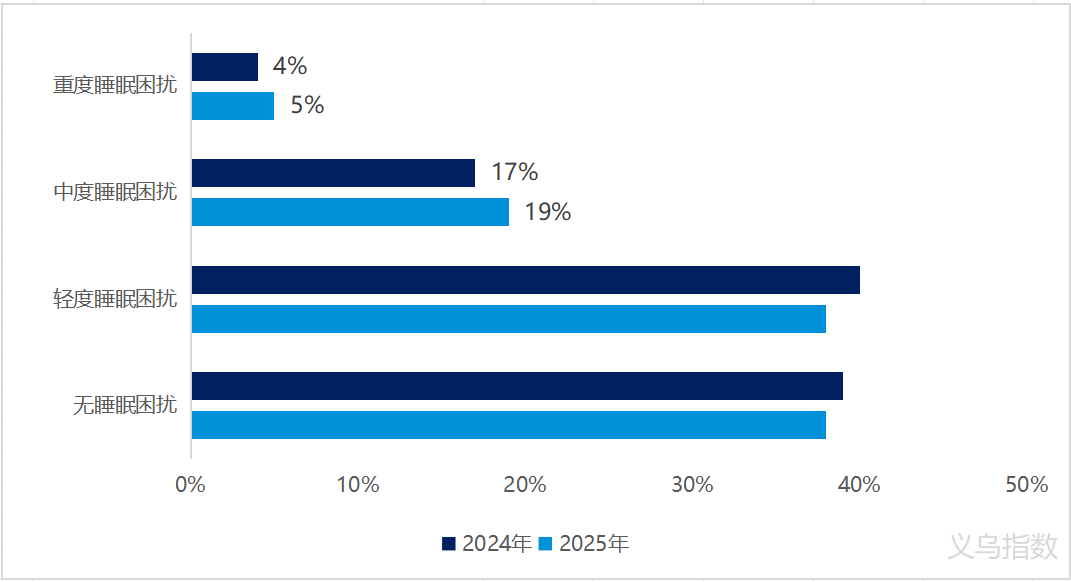
Nowadays, sleep problems are no longer an individual concern but a universal challenge covering all age groups. According to data from iResearch, by 2025, over 60% of the population in China will be experiencing sleep problems, especially among the younger generation. The proportion of people with moderate to severe sleep problems has been continuously rising. Among them, the proportion of people with moderate to severe sleep problems among the post-2000s and post-90s generations has increased by 11% and 5% respectively year-on-year.
The proportion of people with sleep problems in China in 2024 and 2025
Data source: iResearch Consulting Group
www.ywindex.com
As the number of people suffering from insomnia continues to expand and sleep problems become increasingly severe, the "sleep economy" has become increasingly popular, and the bedding market has also reached a new peak. According to data from iResearch, 64% of consumers will improve their sleep by choosing to purchase home textile products. Bedding has become a new business opportunity for enterprises to seek profits. For instance, Atour, a well-known hotel brand, sold over 3 million deep sleep pillows and 770,000 deep sleep quilts in 2024. Its retail business revenue accounted for half of its hotel business. Its retail brand "Atour Planet", which was established only four years ago, can rank among the top four in China's home textile industry.
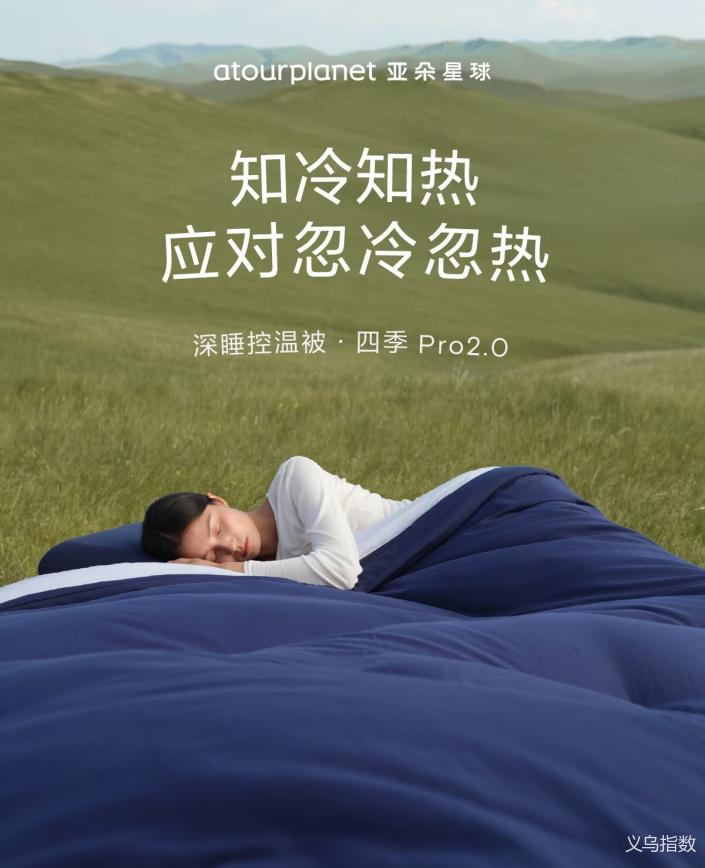
Image source: Atour Planet "Deep Sleep Temperature Control Blanket" Four Seasons Pro2.0
It can be seen from this that paying for "a good night's sleep" has driven the continuous growth of the bedding market sales.
2. The trend of consumption upgrade is becoming more prominent, and the purchasing scenarios are constantly expanding
The upgrading of consumption and the diversification of purchasing scenarios have become important driving forces for the continuous growth of the bedding industry. On the one hand, the demand for mid-to-high-end bedding is constantly increasing. Data shows that in 2024, the sales volume of bedding products priced over 600 yuan on mainstream e-commerce platforms has significantly increased, especially those priced over 1,000 yuan, whose market share has risen from 12.4% to 13.4%. More and more consumers are willing to pay a premium for quality sleep. On the other hand, the frequency of bedding consumption has significantly increased. At present, bedding consumption is no longer confined to essential needs and seasonal replacements. Its consumption scenarios are gradually shifting towards diverse scenarios that satisfy emotions and experiences. Consumers will purchase bedding items including IP collaborations and limited-edition products for festivals. Data from social media platforms show that young people under the age of 30 have a significantly higher demand for bedroom aesthetics than the previous generation. Their pursuit of a sense of ritual in life has driven bedding to transform from a necessity to a quality consumer good, further boosting the market size.
However, as the market size continues to expand, industry competition is becoming increasingly fierce. How to seize the sleep sovereignty of young people has become the core issue for bedding enterprises.
At present, the competitive landscape of China's home textile industry is relatively fragmented, and the market concentration of the bedding industry is relatively low. Data shows that in 2024, Mercury Home Textiles will hold the top market share in the industry, reaching 1.7%. The other two leading brands, Luolai Life and Fuanna, will have market shares of 1.4% and 1.0% respectively. This is mainly due to factors such as the relatively low entry threshold and the high cost of scale expansion in the home textile industry.
The market share of home textile enterprises in China in 2024
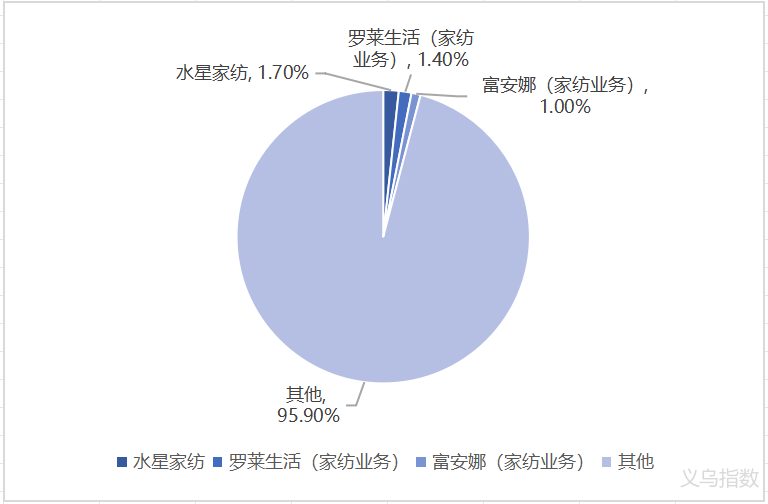
Data source: Kaiyuan Securities
www.ywindex.com
From the perspective of the distribution of industrial belts, China's bedding industry has formed regional industrial clusters represented by Nantong, Jiangsu Province, Jiaxing, Zhejiang Province, and Shandong Province. Among them, Nantong Home Textile City has an annual transaction volume of over 230 billion yuan and is one of the world's top three home textile centers.
02
The "easy win" track is proactively seeking changes
Driven by the dual forces of the rise of the sleep economy and the upgrading of consumer demands, consumers' demands for bedding have become more diversified, with both practical value and emotional value being indispensable. At present, bedding can roughly be divided into the following four major categories:
Cover types: duvet covers, bedspreads, bed caps, bed sheets;
Pillow products: pillowcases, pillow cores, pillowcases;
Bedding products: silk quilts, down quilts, wool quilts and other quilt cores;
Kits: Three-piece sets, four-piece sets and other sets.
From the perspective of category performance, essential products such as bedding sets, quilts and pillows still dominate the market, collectively contributing over 70% of sales. Business operators related to the bedding industry in Yiwu market said, "Since August, we have entered the traditional domestic sales peak season, and the market situation usually lasts until the Spring Festival." This year, items like silk quilts, wool quilts and milk velvet four-piece sets have been selling very well and are the best-selling categories in our store. In addition, according to the visit and understanding of Yiwu Index Market, the sales of wedding sets in festive colors such as bright red, rose red and gold are also constantly rising.
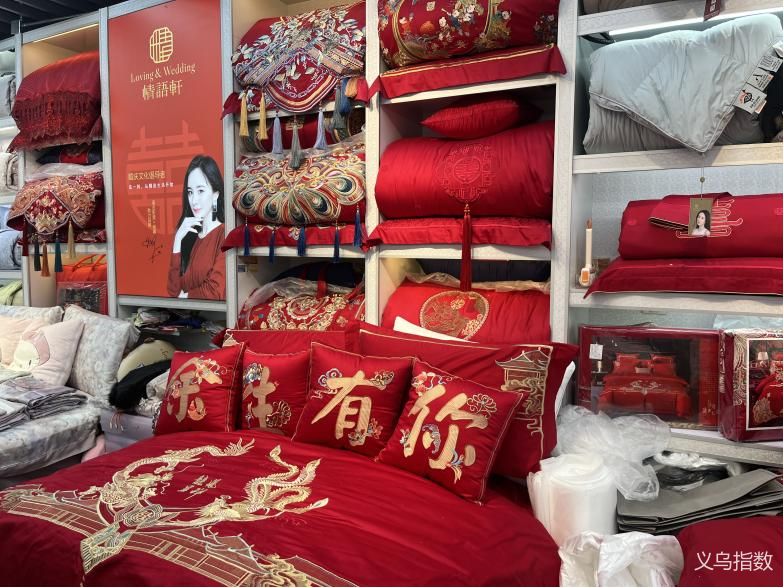
The festive bedding in Zone 5 of Yiwu International Trade City. Image source: Yiwu Index
(1) Domestic market: Integration of online and offline + breakthrough of major products + self-indulgent consumption
A full-channel layout integrating online and offline. New models such as social e-commerce and live-streaming sales provide more sales channels for bedding brands to reach consumers. Data shows that in the second quarter of 2025, the transaction volume of bedding products on e-commerce platforms (Tmall + JD.com + Douyin) increased by 9.61%. Take Mercury Home Textiles as an example. From 2019 to 2024, the compound annual growth rate of its online revenue was 17.2%, and the proportion of online revenue was approximately 55%. Meanwhile, offline channels are also actively transforming. Besides Atour's "hotel experience" model, some home textile brands have also begun to offer personalized bedding consultation and priority experience of new products and other distinctive services in their stores, turning stores from mere sales points into brand experience centers. Enterprises strengthen brand building and scenario-based marketing through forms such as experience stores and home furnishing stores to enhance their brand's market competitiveness.
The strategy of major single products drives the development of all product categories. As consumers' demands for bedding become increasingly refined and diversified, the upgrading process of the three core categories of pillows, bedding sets and mattresses has significantly accelerated. Star products can bring huge traffic and popularity to brands. For instance, after the success of the deep sleep pillow of "Atour Planet", it promptly launched a series of products such as deep sleep quilts, extending consumers' trust from a single product to the deep sleep solutions built by the brand. Similarly, Rolai Life has also driven the growth of its high-end goose down quilt series through the success of its "zero-pressure deep Sleep Pillow", with the GMV of this series increasing by 566% year-on-year in the first three quarters of 2025. Establishing brand recognition through super single products and leveraging the momentum to drive the growth of related categories have become an important trend for the bedding industry to achieve sustained and healthy development.
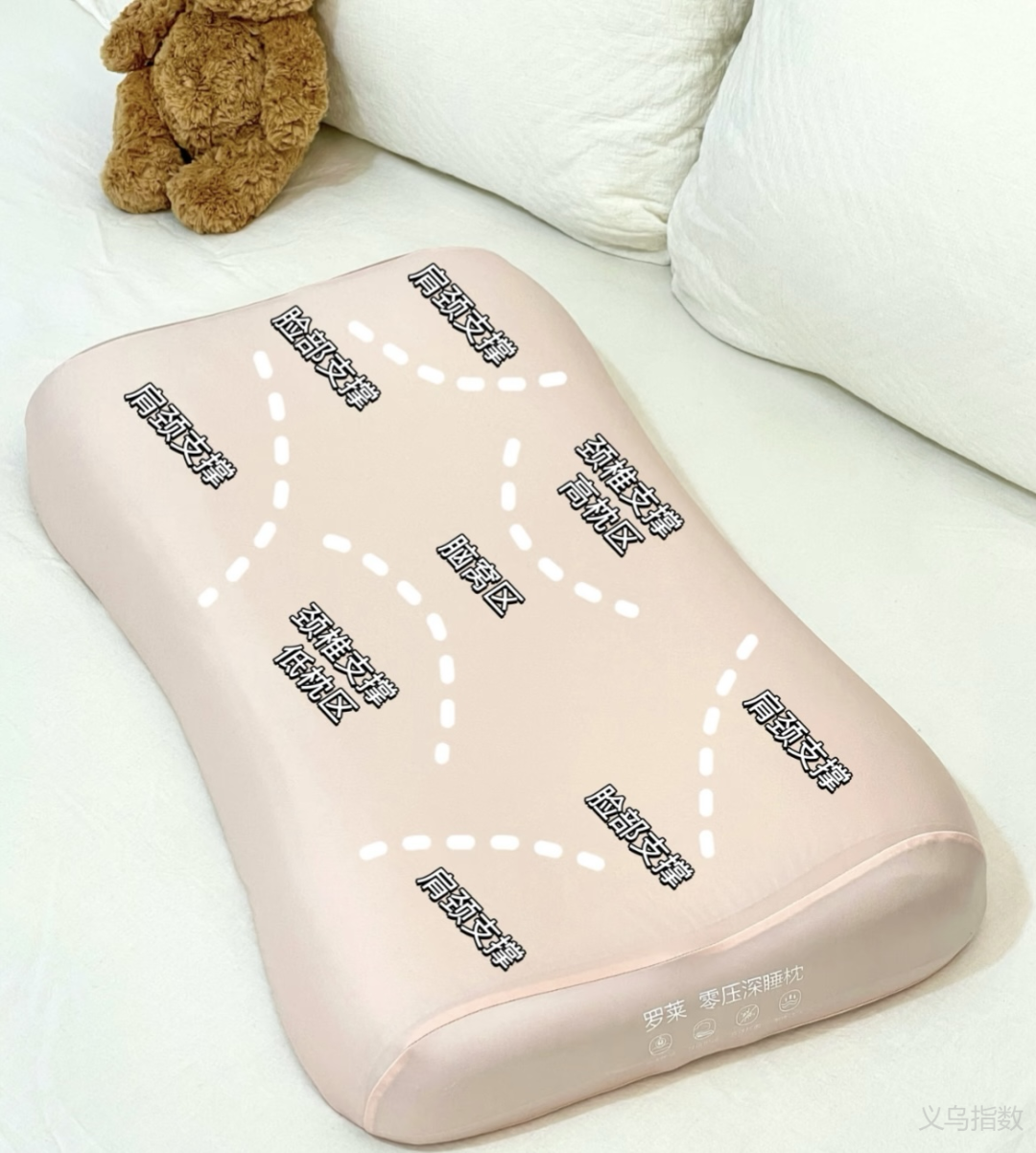
Luo Lai Life's "Zero Pressure Deep Sleep Pillow" Image source: Xiaohongshu
Self-indulgent consumption drives the transformation and upgrading of the industry. To meet consumers' demands for emotional value and sleep healing, enterprises are constantly innovating in product design, materials, functions and technology. Meanwhile, the younger generation is increasingly attaching importance to the aesthetics of bedrooms and prefers to convey their individuality through the style of bedding. Bedding in simple and cute styles has attracted much attention and leads in sales and popularity. For instance, Beast has collaborated with Hello Kitty to launch the "Pink and Adorable" series, combining Hello Kitty's classic image with popular color schemes such as millennial pink and angel pink, and ingeniously integrating them into bedding designs. This has sparked considerable discussion on social media.
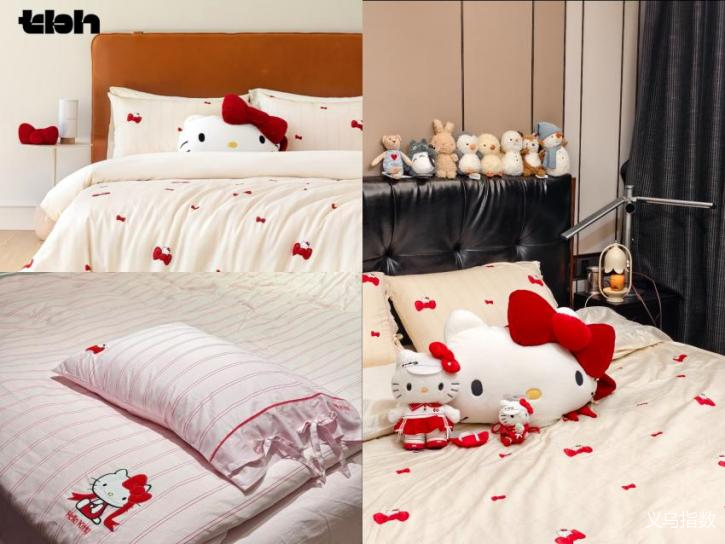
Beast &HelloKitty collaboration bedding image source: Yiwu Index
(2) Overseas markets: Scale growth, diverse demands
China is the world's largest exporter of home textiles. In 2024, China's bedding export value reached 15.4 billion US dollars, representing a year-on-year growth of 6%. In the first half of this year, the export value of bedding products reached 6.96 billion US dollars, increasing by 0.2%, maintaining a stable growth trend.
From the perspective of the global household bedding industry market size, the overall scale was approximately 113.91 billion US dollars in 2024 and is expected to reach 122.3 billion US dollars in 2025, with an average annual compound growth rate of about 7.4% over the next five years.
The global household bedding market size from 2024 to 2030 (in billions of US dollars)
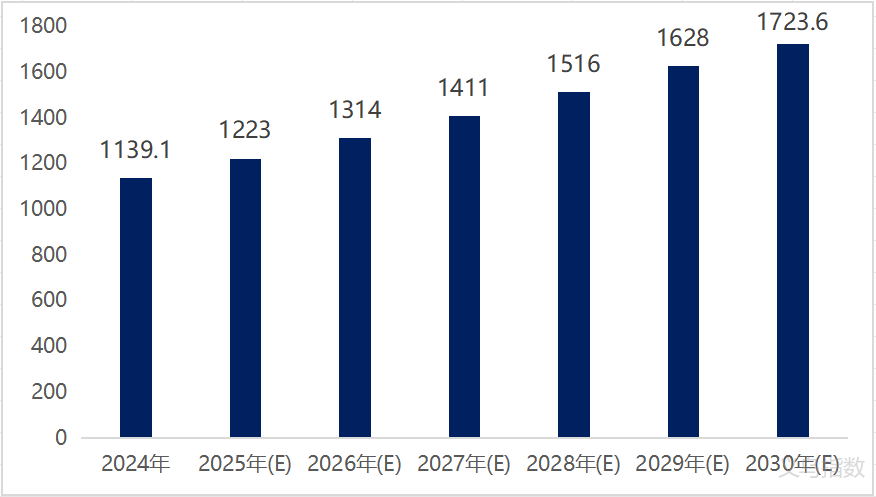
Data source: Big Data Cross-border
www.ywindex.com
Due to the influence of factors such as climate change, living habits and consumption preferences, bedding products vary in overseas markets.
The Asia-Pacific region holds a dominant position in the global bedding market, accounting for approximately 37.5% of the global bedding market share in 2024, with a market size of about 42.7 billion US dollars. Consumers in the Asia-Pacific region, while pursuing quality, pay more attention to cost performance and tend to choose products that are reasonably priced and can meet basic functions. In addition, the climate in the Asia-Pacific region is diverse, and consumers have high requirements for the seasonal adaptability of bedding.
North America is expected to account for approximately 32% of the global bedding market in 2024, with a market size of about 36.5 billion US dollars. Among them, the United States is the largest bedding market in North America. North American consumers have a strong demand for high-end and luxurious bedding products such as smart mattresses, and they pay close attention to the comfort and quality of the products. In terms of materials, bedding made of natural materials such as silk and wool is preferred.
Europe is expected to account for approximately 19.2% of the global bedding market in 2024, with a market size of about 21.9 billion US dollars. European consumers prefer bedding that is environmentally friendly, organic and made of sustainable materials. The simple and practical design style conforms to the aesthetic standards of local consumers.
The Middle East is expected to account for approximately 5.4% of the global bedding market in 2024, with a market size of about 6.2 billion US dollars. Middle Eastern consumers have high demands for the quality and luxury of bedding. With the accelerated urbanization process in the Middle East, influenced by the high-end hotel industry and luxury residential projects, there is a large demand for mid-to-high-end bedding.
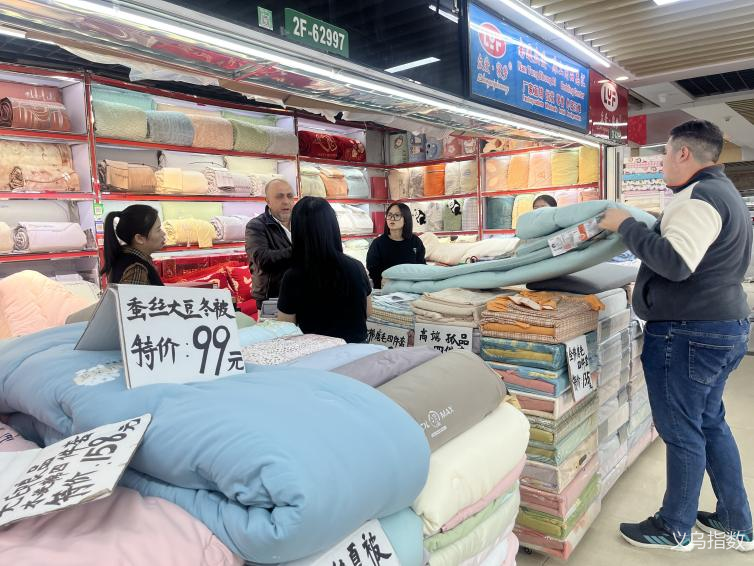
Foreign merchants in Yiwu International Trade City are purchasing bedding. Source: Yiwu Index
03
Yiwu Bedding Industry 2.0
At present, the market concentration of the bedding industry is generally low. Yiwu, relying on its advantage as the world's largest distribution center for small commodities, has become an important sales hub for bedding in China. According to the monitoring of Yiwu Index, since 2020, the prosperity index of bedding products has generally shown an upward trend. It rose from 939.79 points in 2020 to 1,110.86 points in 2024, an increase of 18.2%.
The average prosperity index of bedding products from 2020 to 2024
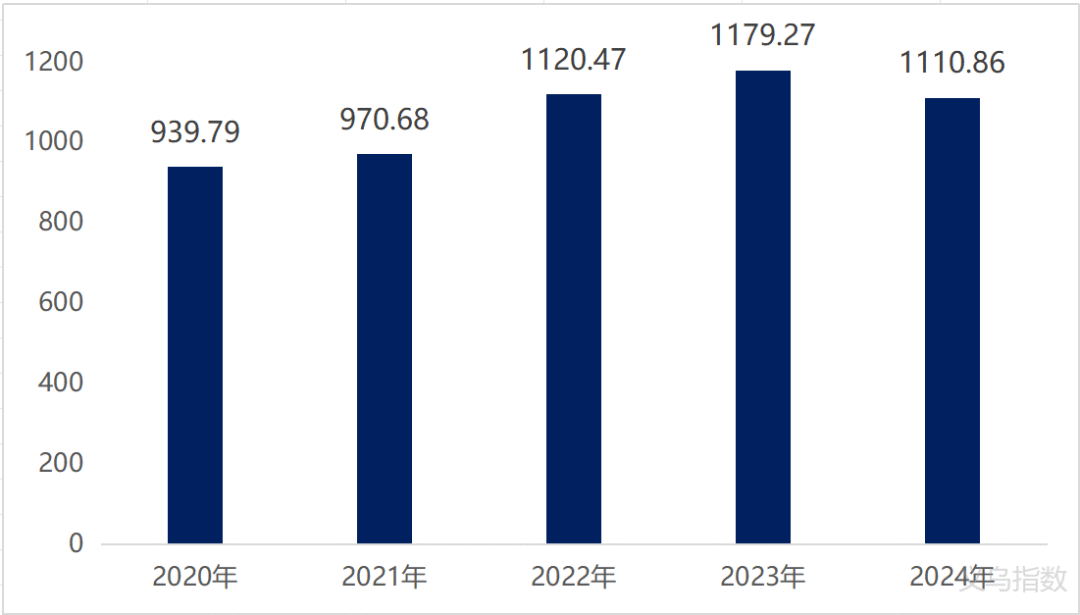
Data source: Yiwu Index
www.ywindex.com
(1) Overview of the Bedding Industry in Yiwu Market
The merchants related to the bedding industry in Yiwu Market are mainly distributed on the second floor of the fifth zone market of the International Trade City, with over 1,600 business stalls currently in the market. Our main product categories include four-set items, blankets, quilted quilts, carpets, throw pillows, sofa cushions and other goods. We have a wide range of categories and complete varieties.
From the perspective of product sales, the ratio of domestic and foreign trade sales is approximately 4:6. Domestic sales cover the entire country, with the Yangtze River Delta region, the Pearl River Delta region and other provinces being the majority. The main export destinations are countries and regions in Africa, the Middle East, Europe, etc.
Vice President Chen of the bedding industry in Yiwu said, "After decades of development, the bedding industry in Yiwu has established a complete industrial foundation." In the face of the rapid changes in current consumer demands, market merchants are actively transforming and developing from dimensions such as product innovation and brand building. By enhancing the design sense of products, cultivating their own brands, and expanding online channels, they are constantly strengthening the market competitiveness and added value of their products.
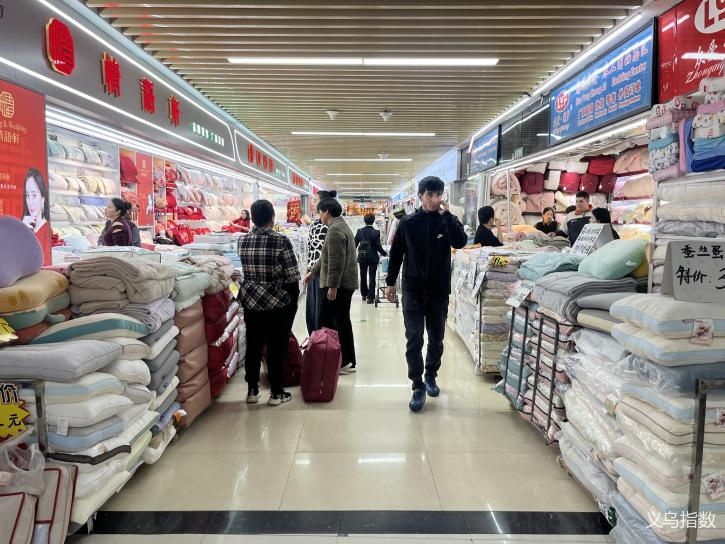
The bedding industry in the fifth zone of Yiwu International Trade City. Source: Yiwu Index
(2) Yiwu Bedding 2.0: Quality Upgrade + Brand Building
Driven by the evolution of consumer demand in the bedding market, the bedding industry in Yiwu has upgraded from multiple dimensions and is moving towards the 2.0 development stage.
The first is the innovation in materials and craftsmanship. In terms of materials, bedding in the Yiwu market has gradually expanded from traditional flannel to more textured high-end fabrics such as rabbit plush and mink plush. Natural and environmentally friendly materials like Tencel and pure cotton also continue to be favored by the market. In terms of craftsmanship, digital printing, with its advantages of small batch production and quick customization, can meet personalized demands. In large B-end orders such as foreign trade exports and hotels, traditional printing techniques with better costs still dominate. Meanwhile, with the popularization of the concept of healthy sleep, functions such as mite prevention and antibacterial properties have become important selling points of products. Green and environmentally friendly materials represented by polylactic acid (corn fiber) and bamboo fiber have gradually shifted from market highlights to standard configurations, promoting the overall development of products towards a healthier and more sustainable direction.
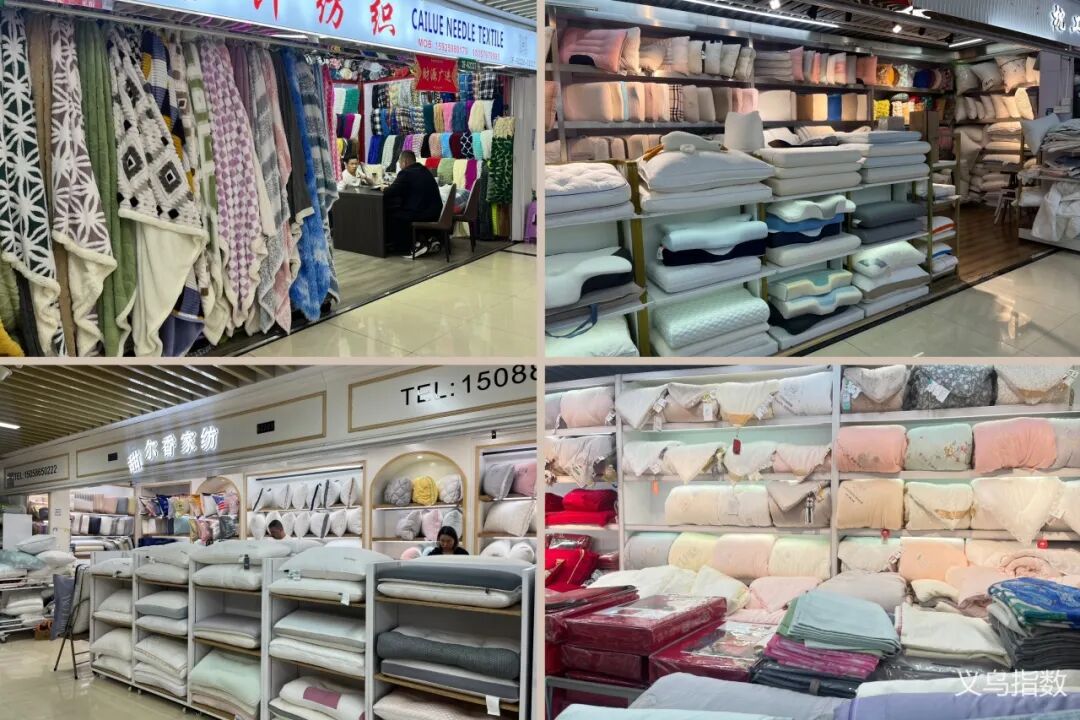
The bedding shops in Zone 5 of Yiwu International Trade City. Image source: Yiwu Index
The second is brand building. Facing fierce homogenized competition, an increasing number of merchants have begun to shift from OEM to building their own brands. Branding has directly brought about significant premium space. A business owner in Yiwu Market said, "Nowadays, consumers pay more attention to brand effect and fashionable expression when choosing bedding. Only with a brand can there be higher pricing power." For instance, the local brand "Hui Gang Home Textiles" from Yiwu has explored a new path to go global by registering its own brand in the United States, thereby enhancing the added value and competitiveness of its products.
From a "price war" to a "value war", the bedding industry in Yiwu is undergoing a critical stage of transformation and upgrading. Through the tempering of market competition, it is gradually moving towards quality, branding and fashion.
Tips for getting a good night's sleep
-
One hour before going to bed, cut off the source of stimulation and stay away from mobile phones. Blue light can inhibit the secretion of melatonin.
2. Dim the lights or turn on warm night lights, and draw thick curtains to block out external light.
3. Adjust the comfort of the mattress and pillow, and keep the room temperature between 18 and 22 degrees Celsius to make the body feel more relaxed.
Soak your feet in warm water for 5 to 10 minutes to promote blood circulation and help lower your body temperature (a slight drop in body temperature can trigger drowsiness).
—— The content of this article is translated by Al ——
 My favorites