

The "out of nothing" world trade center: The city most similar to Yiwu in the world is actually...
Publish Time:2025-11-21 09:35:01Pageviews:345


abstract: Many cities in the Middle East are emulating Dubai, and many cities in China are also emulating Yiwu. In the future, the development models of Dubai and Yiwu will provide valuable references for more cities and lead the global commercial civilization to a new height.
In the urban pattern shaped by the process of globalization, some cities have stood out by virtue of their unique resource advantages, such as Shanghai and Paris. However, there are also some cities that do not possess significant geographical advantages or abundant resource conditions. They are the products that emerged in specific historical contexts, such as Las Vegas and Curitiba.
When it comes to the development model of "creating something out of nothing", Yiwu in China is undoubtedly a highly representative case. Yiwu, a small county in the central part of Zhejiang Province, is neither by the sea nor along the border. It has many mountains but little land. However, it has now become an important hub for international small commodities.
Abroad, there is also a similar commercial center - Dubai. Dubai is located in the heart of the desert and is short of natural resources. However, with bold innovative concepts, advanced urban planning and an open and inclusive business environment, it has successfully developed into a globally renowned commercial, tourism and financial center.
In the grand development map of globalization, regions with scarce resources are often regarded as the "inherent shortcoming" of development. What enables the two cities of Yiwu and Dubai to create business miracles despite not having an advantage in resources?
In this article, the Yiwu Index will analyze for you the "out of thin air" commercial genes of Yiwu and Dubai.
01
From Nothing to Something: The Rise of Two Commercial Cities
The rise and prosperity of a city often stem from a profound understanding of its own situation and bold changes. Dubai and Yiwu are typical examples among them. Under the circumstances of limited resources, they achieved a transformation from nothing to something with their fearless spirit of innovation.
The development process of Dubai can be regarded as a history of striving to make a fortune in the face of resource constraints. Before oil was discovered in 1966, Dubai thrived on pearl industry and re-export trade. Dubai is located on the Persian Gulf coast of the Arabian Peninsula, bordering the Strait of Hormuz. Its geographical location is relatively advantageous. The Persian Gulf has been a must-pass place for trade between the East and the West since ancient times. Merchants could reach the shore by crossing the Dubai Creek along the strait. Therefore, Dubai has become a natural trading port.
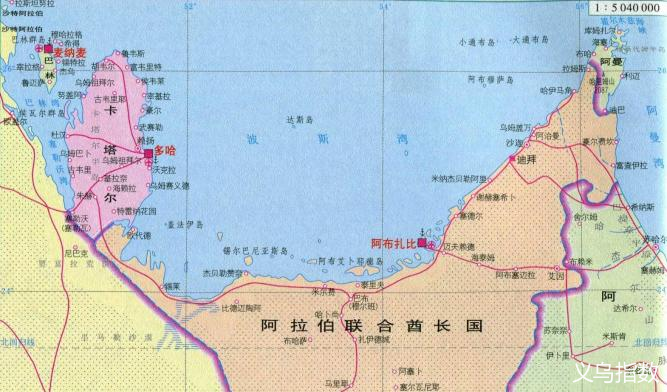
Image source: onegreen.net of Dubai and the Persian Gulf Coast
In the first half of the 20th century, with the gradual decline of the pearl trade, Dubai's economy fell into difficulties. In 1966, oil was first discovered in the Fast oil field, bringing a major turning point to Dubai. However, Dubai's oil reserves are not large. It is estimated that they are approximately 4 billion barrels, worth about 200 billion US dollars, which is equivalent to Dubai's GDP in less than two years. Dubai, which cannot survive on oil like ABU Dhabi, the big brother of the United Arab Emirates, has resolutely chosen to transform.
Dubai is not only reinvesting the revenue from oil exports into the construction of ports and airports, but also actively planning and implementing strategies to attract foreign investment. In just over a decade, Dubai has adhered to the concept that "no one will remember being second in the world's landscapes";, creating numerous world-class attractions to attract a large number of foreign tourists and investors. In 1999, the world's first seven-star hotel, the Burj Al Arab, opened. In 2001, Dubai began to build the Palm Islands, which are known as the eighth wonder of the world. In 2010, the Burj Khalifa, the world's tallest tower at 828 meters, was completed and became a new landmark of Dubai. Since the end of the 20th century, with the arrival of many foreign investors in Dubai, the city has begun to build multiple free trade zones and formulated a series of favorable policies for foreign investment, thus attracting a large amount of foreign capital to enter. Once the right strategy is identified, Dubai's development into a world business center will be accomplished in one go.
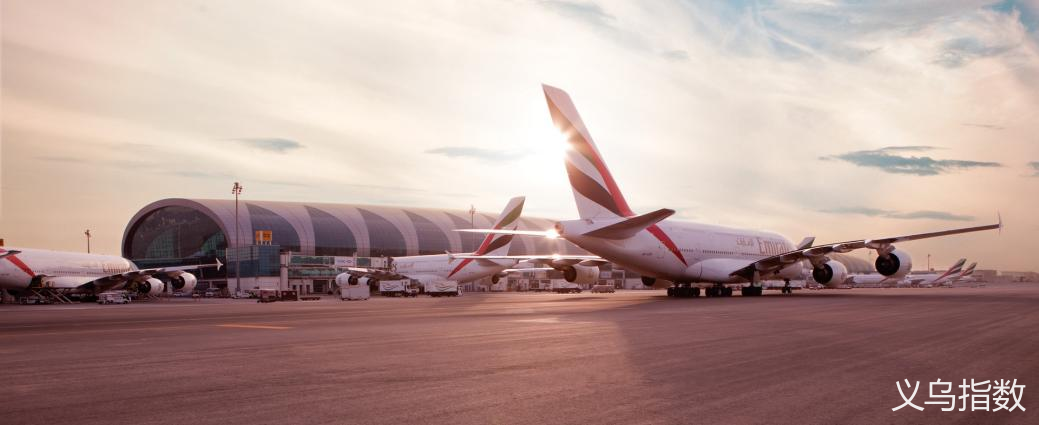
Image source of Dubai International Airport: Emirates.com
The development of Yiwu is similar to that of Dubai. Under the policy of reform and opening up, in 1982, Yiwu made the decision to open up its small commodity market and invested in building an "open-air market" on both sides of Zhudian Street in Choucheng Town, the county seat, which could provide shelter from the rain and be used for setting up stalls. The first generation of small commodity markets thus emerged and developed rapidly. With the in-depth advancement of reform and opening up, the Yiwu government has continuously introduced supportive policies to encourage the innovative development of the market. Against the backdrop of the strengthening trend of global economic integration and the increasing demand for international trade, Yiwu Market has achieved a leapfrog development from the first-generation street market to the indoor market, and then to the current fifth-generation market of the continuous international trade city. Moreover, it is moving towards the sixth-generation market - the global digital trade center. During its development, Yiwu has implemented the "e-commerce replacing the city" strategy, which has met the rapidly growing demands of business entities. With each upgrade, Yiwu has been constantly exploring and innovating, accurately seizing policy opportunities and market directions. For this reason, Yiwu has become a "world supermarket", continuously exporting small commodities to all parts of the world.
02
Practical Innovation: The Transformation Strategies of Dubai and Yiwu
In resource-scarce areas, the essence of "creating something out of nothing" often lies in empowering natural advantages through institutional innovation and reconstructing local values with a global perspective. Dubai has leveraged petrodollars to boost its "hard infrastructure", while Yiwu has leveraged small commodities to enhance its "soft power". Eventually, both have become global trade centers.
(1) Build a commercial and trade hub
The Middle East is located at the crossroads of Europe, Asia and Africa. A three-hour flight covers a global population of 2 billion, with an average flight time of less than 10 hours. It is an ideal stopover for intercontinental routes. Dubai looked around and found that none of its neighbors had taken advantage of this. As a result, Dubai has successfully attracted well-known airlines such as British Overseas Airways and Lufthansa to settle in by offering preferential policies and ensuring flight load factors, thus building a wide international route network and becoming an important node in international air transportation. Meanwhile, Dubai is vigorously building ports. In 1972, Port Rashid was built in Dubai. In 1979, Port Jebel Ali was built. Nowadays, Port Jebel Ali has become one of the top ten container ports in the world. In January 2025, the expansion project of Container Terminal 2 at Jebel Ali Port was completed, increasing the total handling capacity to 15 million TEUs and further consolidating Dubai's position as a global commercial center in terms of maritime transportation.
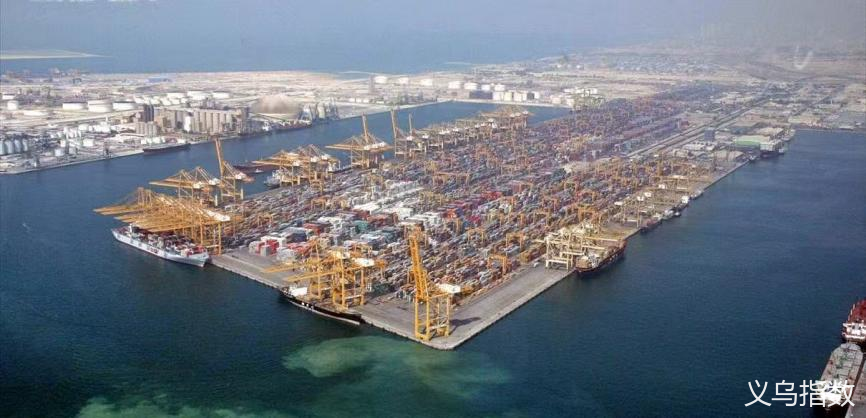
Image source of Port Jebel Ali: Wikipedia
In comparison, the geographical location of Yiwu is not so advantageous. Yiwu is located in Zhejiang Province, surrounded by many mountains and without a coastal port. In terms of geographical conditions, it seems not conducive to the development of large-scale logistics transportation. However, Yiwu was not bound by unfavorable geographical conditions. Since 1993, Yiwu has implemented the strategies of "attracting business and transforming industry", "promoting industry through business", and "linking trade and industry", vigorously developing industries with obvious advantages and high market correlation. It has gradually established an industrial system closely linked with the small commodity market, thus forming a pattern of "small commodities, big world; small enterprises, big clusters; small industries, big market";.
While promoting industrial development, Yiwu has been continuously optimizing its business environment, stimulating market vitality, and striving to achieve convenient access, flexible transformation, and efficient exit for all types of market entities. It also promotes "zero obstacles and no borders" for foreign investment registration, constantly attracting foreign investors to do business in Yiwu. With the continuous convergence of industrial resources and foreign merchants, Yiwu has successfully broken through the limitations of its geographical environment and become a global trade hub, enabling all kinds of goods to be exported efficiently and conveniently to over 220 countries and regions around the world.
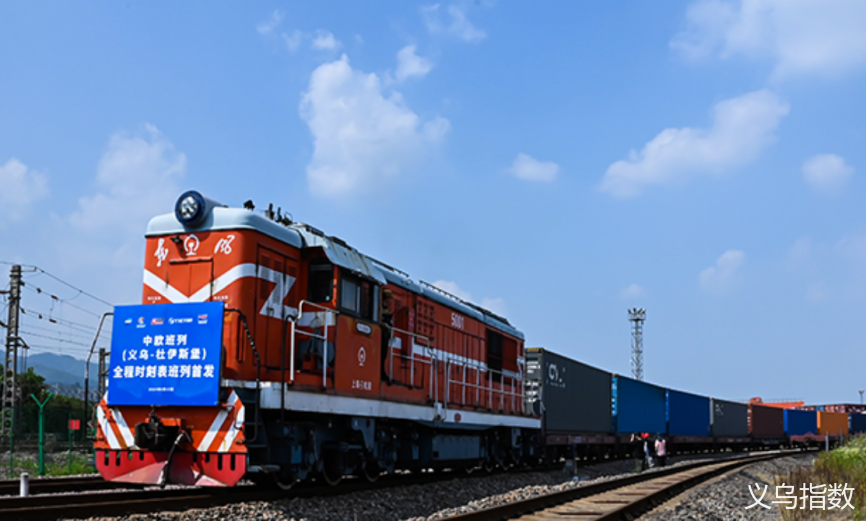
The source of the China-Europe Railway Express: Yiwu Media Convergence Center
By deeply exploring and making the most of their strategic positions, both Dubai and Yiwu have delved into markets around the world, handling a vast amount of goods and becoming super hubs for global trade.
(2) Lead institutional innovation
The Dubai model is a paragon in terms of institutional innovation. To attract global capital and enterprises to settle in, Dubai has established multiple free trade zones. The Jebel Ali Free Trade Zone (JAFZ) is characterized by attracting a large amount of overseas investment and offers preferential tax and trade policies to the enterprises that settle in. Despite being only 57 square kilometers in size, the Jebel Ali Free Trade Zone has attracted 36% of the entire United Arab Emirates' foreign direct investment and contributed one fifth of Dubai's GDP. The Dubai International Financial Centre (DIFC) focuses on the financial sector and has become a financial center for companies in the Middle East, Africa and South Asia markets.
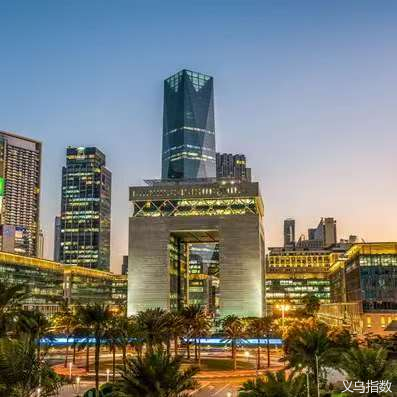
Image source of Dubai International Financial Centre: visitdubai.com
Reform is the only key to the development of Yiwu. At the beginning of the 21st century, with China's accession to the World Trade Organization, the Yiwu market encountered institutional and mechanism obstacles in its process of transforming from domestic to international, which pushed Yiwu to accelerate its reform. In March 2011, The State Council officially approved the "Overall Plan for the Comprehensive Reform Pilot of International Trade in Yiwu City, Zhejiang Province", making Yiwu the first county-level city in the country to be approved as a comprehensive reform pilot by The State Council. The establishment of the market procurement trade mode (customs supervision code "1039") in 2013 was an important achievement of the current round of international trade reform in Yiwu. This trade mode is characterized by "multiple varieties, small quantities and multiple batches";, tailor-made for the market and providing convenience for small, medium and micro enterprises. Thanks to the reform, Yiwu has rapidly developed into a large city of Type II with a permanent resident population of nearly 2 million. The proportion of its export volume in the national total has increased from 0.18% in 2010 to 2.31% in 2024. The volume of express delivery business has nearly tripled in 10 years, accounting for one-twelfth of the national total. The total number of market business entities exceeds 1.15 million. The online retail sales have ranked first among all counties (cities and districts) in the province for eight consecutive years.
Both Dubai and Yiwu have broken free from the constraints of traditional resources and environment through bold institutional innovations, opening up new channels for economic development and proving that institutional innovation is the key to breaking through development bottlenecks and achieving economic take-off.
03
Openness and Inclusiveness: The Global Business Philosophy of Dubai and Yiwu
In the grand landscape of urban development, resource-oriented models are gradually giving way to more forward-looking development paths. The journey of a city towards becoming a world trade hub does not merely rely on its geographical location and natural resources, but rather on its precise grasp of historical opportunities, unique business culture and continuous innovative breakthroughs.
In 2024, Dubai achieved remarkable results in the field of foreign trade. Dubai's foreign trade volume exceeded 3 trillion dirhams (approximately 5.95 trillion yuan) for the first time by the end of 2024, with a year-on-year growth of 14.6%. It attracted foreign direct investment projects worth 52.3 billion dirhams (approximately 103.006 billion yuan), an increase of 33.2% compared with 2023.
In the same year, the total import and export volume of Yiwu reached 668.9 billion yuan, increasing by 18.2%. Among them, the export volume was 588.9 billion yuan, growing by 17.7%. The total volume exceeded that of 23 provinces in China, and the goods were exported to more than 220 countries and regions around the world. Imports reached 80 billion yuan, increasing by 22.2%.
The President of the United Arab Emirates, Mohammed bin Zayed Al Nahyan, once said, "We will celebrate the arrival of the last barrel of oil." This concept has profoundly influenced the development direction of Dubai. In 2023, the "D33" program was launched in a timely manner, and Dubai's green and sustainable manufacturing plan was vigorously promoted, focusing its development efforts on manufacturing in the clean energy sector. Its goal is grand and clear, aiming to create a livable "20-minute city", attract more investors and international capital, continuously expand economic and trade exchanges with 400 cities around the world, especially in Africa, South America and Southeast Asia. It is committed to doubling its economic aggregate by 2033 and ranking among the top three international cities in terms of economic strength globally. And it has become one of the world's four major financial centers.
Yiwu is going global, and the world is getting to know Yiwu. Openness is the most important keyword. In December 2024, a new round of international trade reform enabled Yiwu to accelerate its breakthroughs in "buying globally" imports and continue to iterate and deepen its efforts in "selling globally". Meanwhile, Yiwu will continue to innovate and build a core competitiveness system for the market. It will focus on enhancing the competitiveness of "people, goods and places", and continuously expand the competitive advantages of "active aggregation of entities, marketable goods and innovative integration of business forms". Moreover, it will leverage digital empowerment to create an international trade fulfillment service system, and focus on the construction of "one online platform + one offline network". Iteratively optimize the comprehensive digital trade service platform, layout and upgrade new commercial and trade infrastructure, and accelerate the formation of a closed loop of the full-chain fulfillment service chain.
The Small Commodities City has also moved the Yiwu Small Commodities Market to Dubai, the "gateway to the Middle East". In June 2022, the first overseas sub-market of the Small Commodities City, the Dubai Market, officially opened for business. The project has a total investment of approximately 1.06 billion yuan, covering an area of 200,000 square meters and a construction area of 160,000 square meters. It includes functions of commodity display and bonded warehousing, and serves a consumer market of 1 billion people. Under the "Brand Going Global" strategy, the Small Commodities City has set up multiple overseas warehouses, exhibition halls, sites and exhibitions worldwide, dedicated to building a leading position for Yiwu commodities to go global and injecting new impetus into international trade.
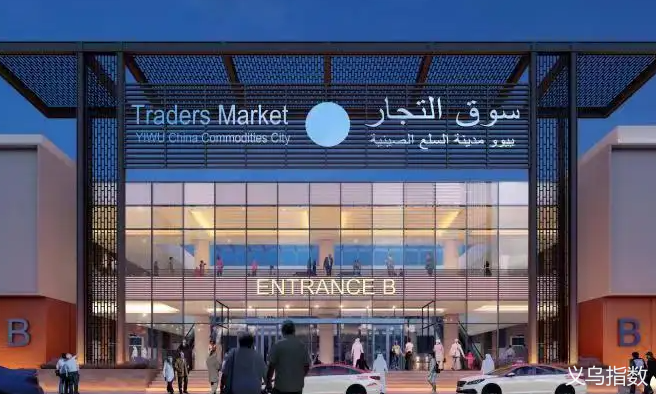
Image source: linkshop.com. China Commodities City in Yiwu, Dubai
Both Dubai and Yiwu have demonstrated forward-looking strategic vision in their global business endeavors. Dubai focuses on manufacturing in the clean energy sector and is committed to building an international financial center and a livable city. Relying on the historical opportunity of reform and opening up, Yiwu, with its profound commercial cultural heritage and pioneering business spirit, has been constantly innovating trade models and building a comprehensive international trade service system.
Although the two cities started from different points, they both adopted an open and inclusive attitude, actively transformed, and achieved rapid economic growth. This vividly interprets the crucial role that seizing historical opportunities and promoting business culture play in building cities into world trade hubs.
Many cities in the Middle East are emulating Dubai, and many cities in China are also emulating Yiwu.
In the future, the development models of Dubai and Yiwu will provide valuable references for more cities and lead the global commercial civilization to a new height.
—— The content of this article is translated by Al ——
 My favorites