

"Turan" Rise: A Single Hair Connects Global Businesses - Analysis of the Wig Industry
Publish Time:2025-11-25 09:22:54Pageviews:411


abstract: The rapid growth of the wig industry's market size is driven by both the expansion of consumption scenarios and the upgrading of industrial belts.
Eight out of every ten wigs in the world come from China.
According to the data from Yiwu Index, it is predicted that China's wig product export value will exceed 37.5 billion yuan in 2024, accounting for 80% of the global market share and holding an absolute dominant position in the global wig manufacturing and export sector.
The global market size of wigs and hair extensions reached 10.06 billion US dollars in 2024 and is expected to grow to 13.28 billion US dollars by 2026, with a compound annual growth rate of approximately 15%.
Data shows that the cumulative play count of topics related to "wigs" on Douyin has exceeded 40 billion times.
From the perspective of the "head", China is neither the "baldest" country nor does it need to consider wigs as a necessity like Africans do. Then why has the wig industry been able to rise so abruptly? In this issue's article, Yiwu Index will take you to understand the wig industry.
01
A lock of hair, a business worth billions
As a part of the "appearment-level economy", today's wigs have long transcended the single function of "covering white patches and bald spots". They not only meet people's basic functional and practical needs but also satisfy their demands for beauty, novelty, and convenient styling.
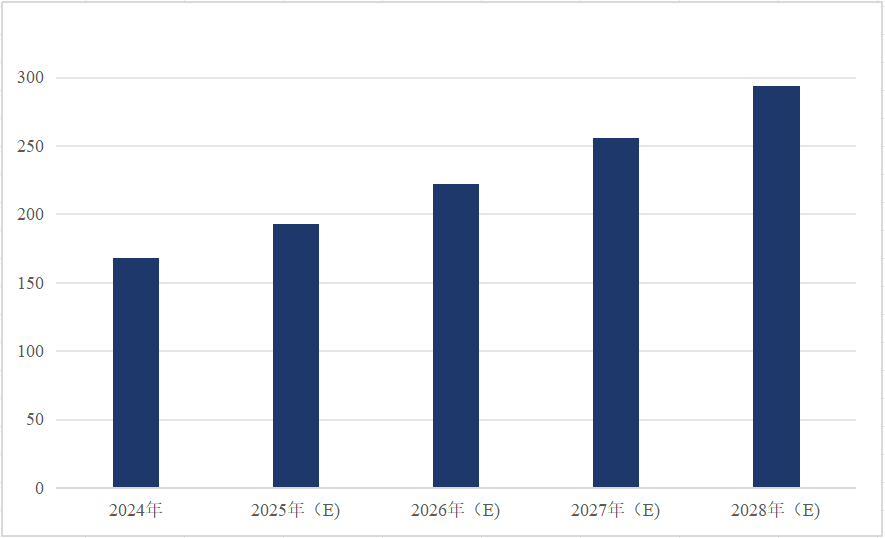
According to the data monitoring of Yiwu Index, the market size of wigs in China has grown from 14.43 billion yuan in 2023 to 16.8 billion yuan in 2024. It is expected to exceed 19 billion yuan in 2025 and maintain a compound annual growth rate of 16% from 2024 to 2028.
The market size of wigs in China from 2024 to 2028 (Unit: 100 million yuan)
Data source: Yiwu Index
www.ywindex.com
The rapid growth of the wig industry's market size is driven by both the expansion of consumption scenarios and the upgrading of industrial belts.
On the one hand, consumers' demand for wigs is gradually shifting from strong functional products to more decorative attributes. Most consumers say that the reason they wear wigs is simply because they look good.
From "covering the skin and baldness" to fashionable items. The primary reason for the expansion of the wig market demand is that contemporary consumers view wigs as fashionable accessories needed for dressing, rather than merely functional products. Consumers aged 18 to 34 have become the main force in the wig market. They have shifted from choosing natural hairstyles such as black and brown tones and long straight hair to pursuing avant-garde designs like gradient colors, ear-hanging dyeing, and highlight dyeing, as well as the fashion freedom to freely switch between wool curls and big waves. Data shows that in 2024, the number of views related to wigs on the Douyin platform reached as high as 12 billion, among which "atmospheric wigs" (such as high bangs on the top of the head and fluffy wool curls) accounted for 35%.

Image source: Yiwu Index. Ear-hanging dyeing and highlight dyeing wig pieces
Cosplay and subcultures have given rise to niche markets. At present, the scale of the general "second dimension" user base in China is huge. Among them, Cosplay enthusiasts have driven a sharp increase in the demand for wigs as key styling accessories. Wigs featuring characters from anime such as "Genshin Impact" and "Demon Slayer" have become bestsellers, with some items selling over 2,000 pieces per month on the Taobao platform. Meanwhile, in the field of cultural tourism, Hanfu experience projects at scenic spots such as the Tang Dynasty Ever-Bright City and the Qinhuai River have driven up the sales of wig accessories. The unit price of hand-woven hair buns in the antique style can reach over 2,000 yuan, further promoting the growth of wig accessory sales.
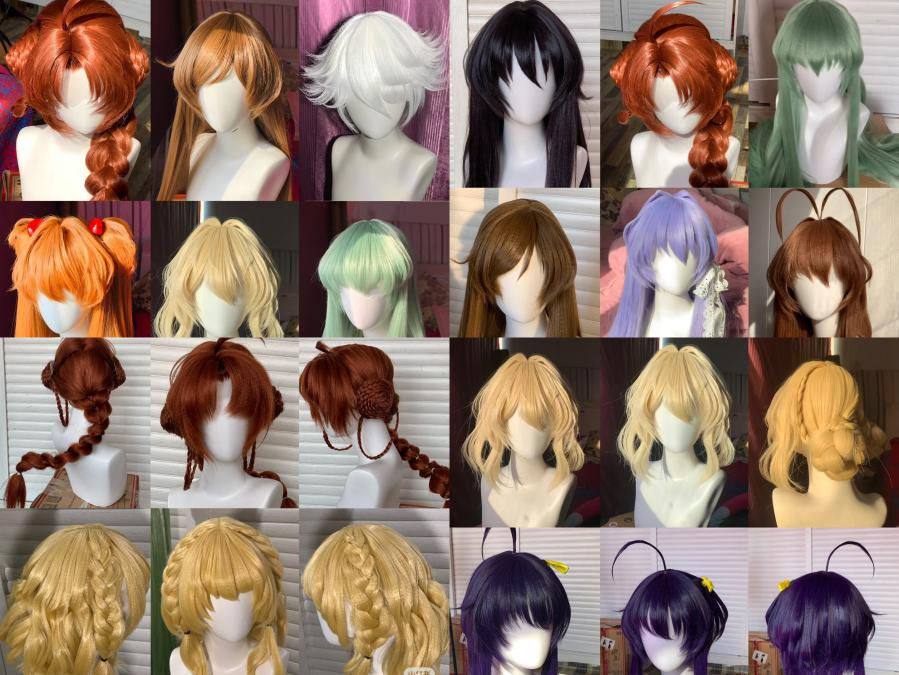
The source of the cosplay wig prop image: Xiaohongshu
On the other hand, the wig industry cluster represented by Xuchang, Henan Province, has been constantly upgrading, promoting the continuous increase of China's share in the global wig market. In 2024, the output value of Xuchang's wig industry exceeded 20 billion yuan, accounting for approximately 60% of the global wig market share.
The local wig brand in Xuchang, represented by Rebecca, has successfully broken through the technological barriers. By independently developing human-like hair fibers, it has broken the monopoly of Japanese and South Korean enterprises in the field of chemical fiber hair strands, achieving a monthly production capacity of 300 tons and helping the local wig industry to transform from labor-intensive to technology-intensive.
02
From "Niche demands" to "universal adaptation"
The wig industry is now experiencing a golden period of vigorous development. As a category that combines practicality and fashion attributes, its market potential is continuously being released from aspects such as category innovation and channel expansion.
(1) The category of "top economy" has been continuously expanding
To meet the diverse needs of consumers, the category of wigs has become increasingly segmented. According to the material, wigs can be divided into three major categories: synthetic fiber hair, human hair and mixed hair. By style, it can be divided into four major categories:
-
Headgear products: Full headgear, half headgear, 3/4 headgear (also known as 7-inch headgear);
-
Hair block products: lace hair blocks, PU hair blocks, bun hair blocks, hair spiral blocks, etc.
-
Hair extension products: hair strands, hair curtains, hair bundles, hair clips, braided hair extensions, etc.
-
Wig accessories: ear-hanging dye, fake ponytail, etc.
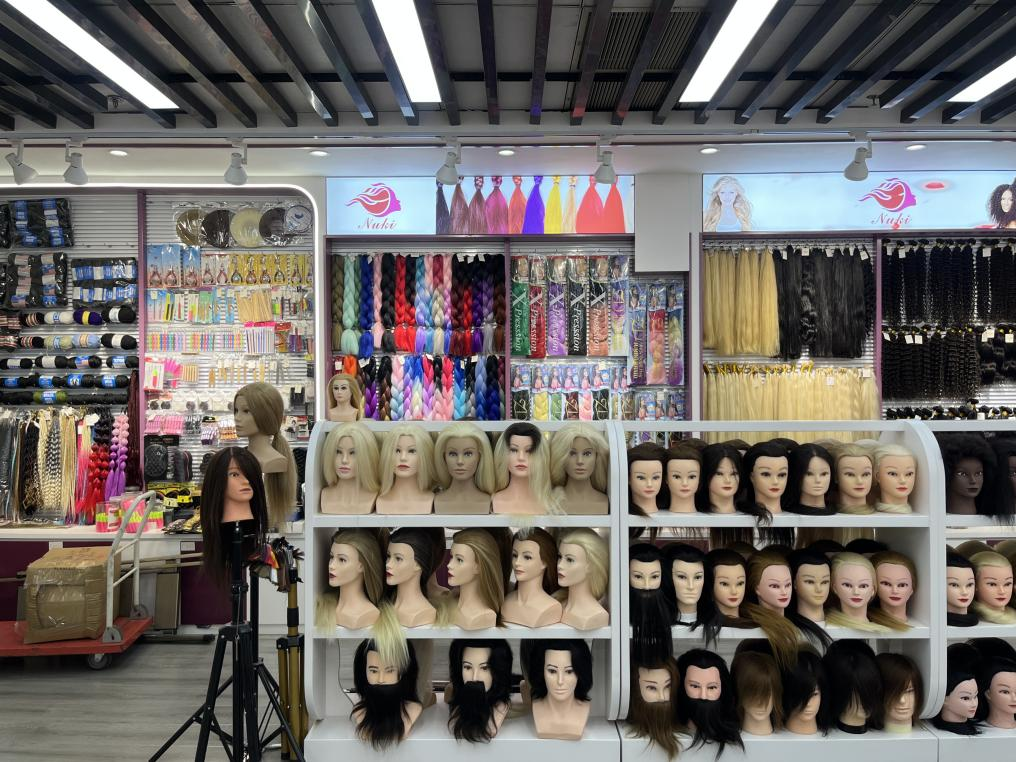
The image source of the wigs in Zone 3 of Yiwu Trade City: Yiwu Index
Recently, the sales of wig pieces in the Yiwu market have soared in the domestic market. Compared with the full-coverage head cover type wigs, the sales of the thinner and more convenient hair extension type wigs are three to four times that of the head cover type wigs. A wig business owner in District 1 said, "During this period, various styles of real human hair wig pieces have become bestsellers in our store. The wig pieces are delivered quickly and updated frequently, which is very in line with the short, flat and fast sales characteristics of e-commerce."
According to the investigation and understanding of Yiwu Index Market, bangs for fetal hair and high cranial top hair for increasing hair volume are favored by female consumers. Due to their convenience of wearing and suitability for daily use, their sales have been continuously rising.
(2) Domestic market: A sudden rise
Social e-commerce and live-streaming sales have driven an explosive growth in wig sales. On the one hand, beauty and fashion bloggers share wig styling tutorials and experiences, creating a powerful grass-planting effect and driving a sharp increase in wig sales. As of July 10th, the search for the "wig" topic has received over 40 billion views on Douyin and more than 5 billion related views on Xiaohongshu. On the other hand, consumers' "what you see is what you get" purchasing expectation makes live streaming an excellent channel for wig sales. Hosts try on wigs on the spot, demonstrate the wearing effect, and explain the wig care methods, which greatly lowers the decision-making threshold for consumers to purchase wigs.
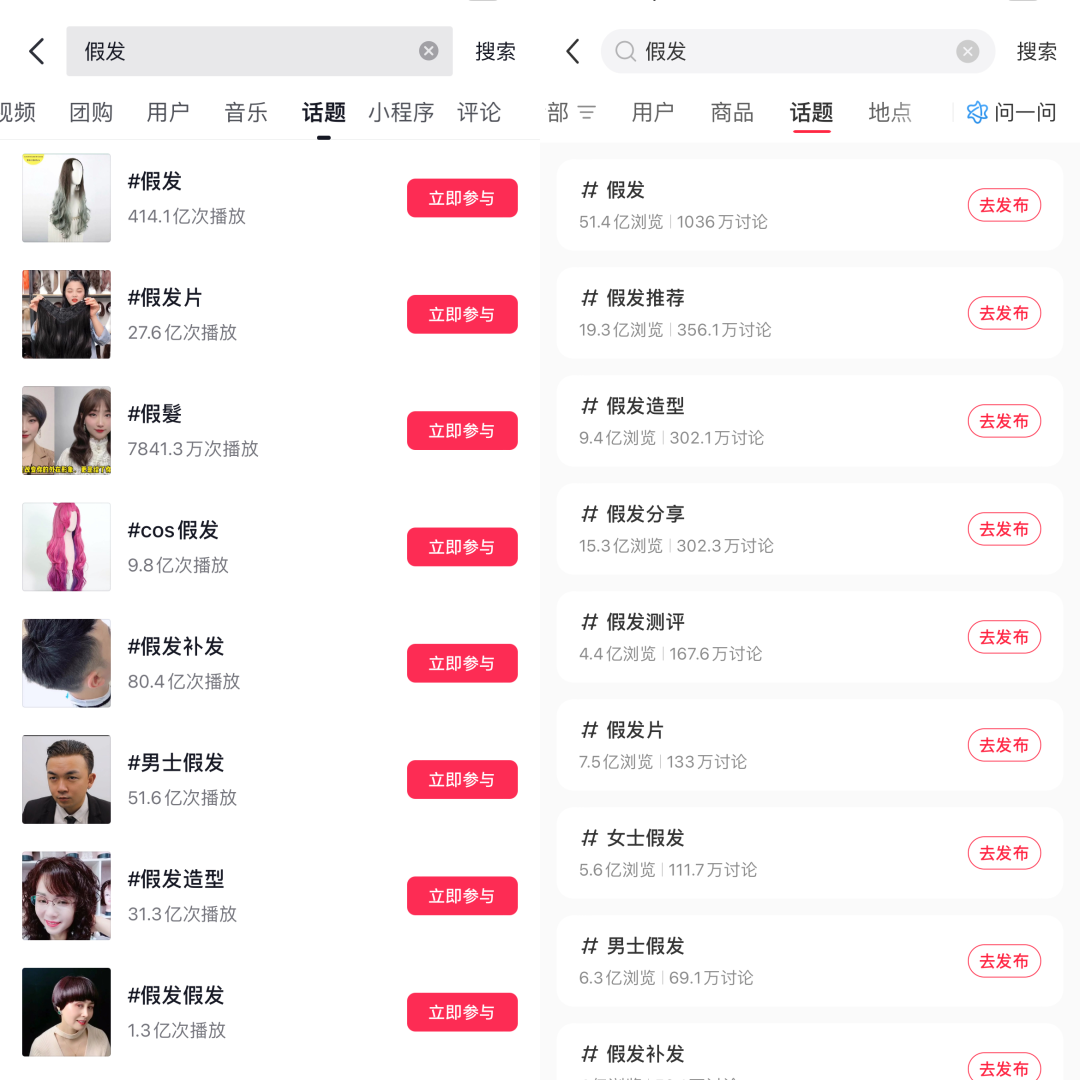
The play count and page views of searching for the keyword "wig" on Douyin and Xiaohongshu platforms
Consumers' demand for wigs is shifting from standardization to personalization. The public hopes that wigs can precisely match face shapes, skin tones, and even professional scenarios. To meet consumers' demands, offline wig studios trim wigs based on customers' head shapes and face shapes, making their personalized customization plans more in line with customers' facial features. They even support millimeter-level customization requirements for hair density and hairline curvature. The custom wig business has gained wide recognition in the market by offering value-added services such as styling design and maintenance. Its sales growth rate is 2 to 3 times that of standard wig products, and the average transaction value can reach tens of thousands of yuan.
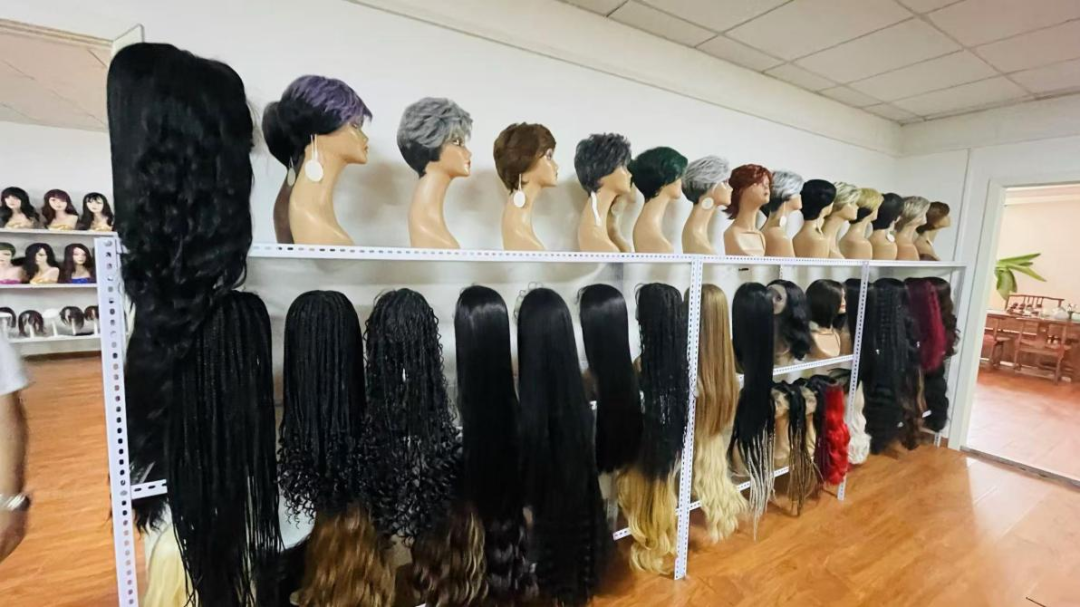
High-end human hair wigs from a certain offline wig studio in Xuchang. Image source: Yiwu Index
(3) Overseas markets: Strong and diverse demand
For every 10 wigs in the world, 8 are Made in China. China's wig industry is a typical export-oriented industry, with its main demand markets concentrated abroad. China's wig production accounts for over 80% of the global total, and its market share is still on the rise. Its exports cover more than 120 countries and regions.
From a regional perspective, wigs mainly flow to the three major markets of North America, Africa and Europe. In 2024, the United States, Nigeria and South Africa will be the main destination countries for China's wig exports.
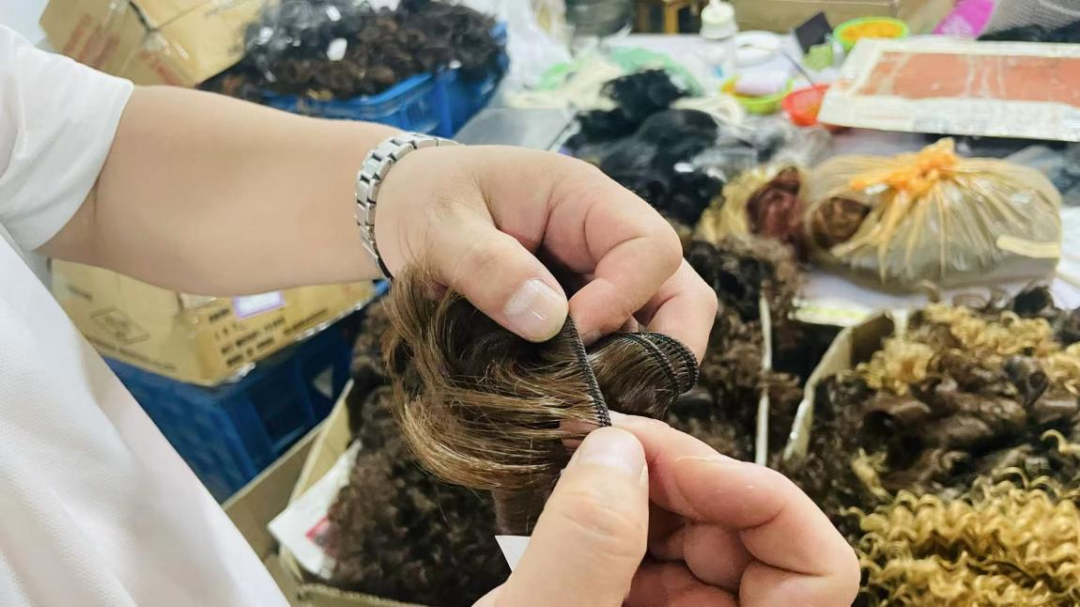
Hand-woven wigs. Image source: Yiwu Index
The North American market is expected to account for approximately 40% of the global wig market share in 2024, with a market size of 1.56 billion US dollars. It is projected to maintain a compound annual growth rate of 6.1% from 2024 to 2031. The North American market places great emphasis on product quality. African American women are the core force in wig consumption in North America. Consumers are less sensitive to the price of wigs and prefer mid-to-high-end real hair wigs and all-lace high-density real hair wigs.
The European market is expected to account for approximately 30% of the global wig market share in 2024, with a market size of 1.175 billion US dollars. It is projected to maintain a compound annual growth rate of 6.1% from 2024 to 2031. European consumers have high demands for quality and environmental protection. High-end, hand-crocheted wigs made of degradable materials have become the new favorite in the market.
Although the African market started relatively late and will only account for about 2% of the global wig market in 2024, it is expected to have a compound annual growth rate of 7.6% from 2024 to 2031, showing a rapid growth. Due to physiological reasons, black people's hair is naturally curly, hard in texture and closely adheres to the scalp. Coupled with slow growth, it is difficult to comb black hair into shape, making the demand for wigs almost a necessity. African consumers consume wigs frequently, with an average replacement cycle of 2 to 3 months. They are highly sensitive to prices, and mid-to-low-end synthetic fiber wigs sell well. When it comes to wig styles, the bangbang hairstyle is quite popular.
From the demand for high-end products in North America to the cost-performance orientation in Africa, and then to the concept of environmental protection and biodegradability in Europe, China's wig industry is precisely meeting the differentiated demands of the global market with a diversified product structure, further strengthening its important role in the international wig trade.
03
From trade to manufacturing
Yiwu is building a global wig distribution center
China has formed wig industry clusters represented by places such as Xuchang in Henan Province, Qingdao and Juancheng in Shandong Province, Shaoyang in Hunan Province, Yiwu in Zhejiang Province, Guangzhou in Guangdong Province and Taihe in Anhui Province.
How did the people of Yiwu manage to make the whole world "crazy" by "selling hair"?
The wig industry in Yiwu actively takes on the technical and human resources transferred from traditional production areas. Relying on a powerful trade and logistics system as well as an international market platform, it has quickly established its own unique industrial characteristics and competitive advantages. Whether it's the dreadbraids of African girls, the ear-dyeing of European and American bloggers, or the colorful long hair of Cosplay enthusiasts... All these seemingly unrelated demands can find solutions in Yiwu.
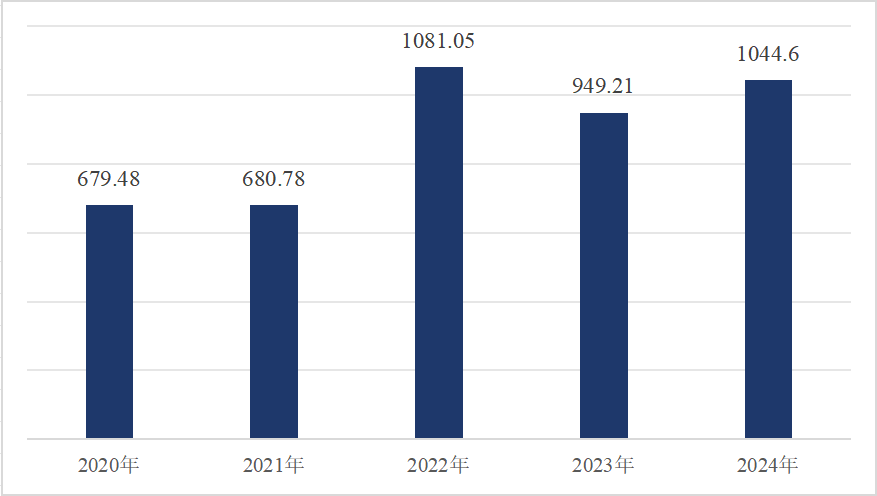
According to the monitoring of Yiwu Index, since 2020, the prosperity index of the wig category has shown a fluctuating upward trend, with an increase of as high as 53.7% from 2020 to 2024.
The prosperity index of wigs in Yiwu Market from 2020 to 2024
Data source: Yiwu Index
www.ywindex.com
(1) Overview of the Wig Market in Yiwu
The Yiwu wig market started in 2006. After nearly 20 years of development, in order to adapt to the changing demands of consumers, it has continuously upgraded and iterated in terms of product diversity, high quality and design, and has become one of the important categories of small commodity exports in the Yiwu market. The relevant merchants are mainly distributed in Zone 1, Zone 3 and Zone 5 of the International Trade City. Currently, there are nearly a hundred business stalls within the market. The main product categories in the market cover a wide range of specifications such as full hair covers, hair extensions for partial hair replacement, and hair curtains for face shaping. In terms of form, they are further classified into various types such as nail hair, stick hair, and sticky hair.
The price range of wig products in Yiwu market is wide, ranging from tens of yuan for synthetic fiber hair covers to tens of thousands of yuan for high-end custom wigs, which can meet the needs of consumers at different levels. From the perspective of product sales regions, wig exports are mainly sold in Africa, Europe, America and other countries and regions, with an industry's outward orientation of over 80%. The domestic sales cover the whole country, with the majority in the East China, North China regions and Guangdong, Sichuan and other areas.
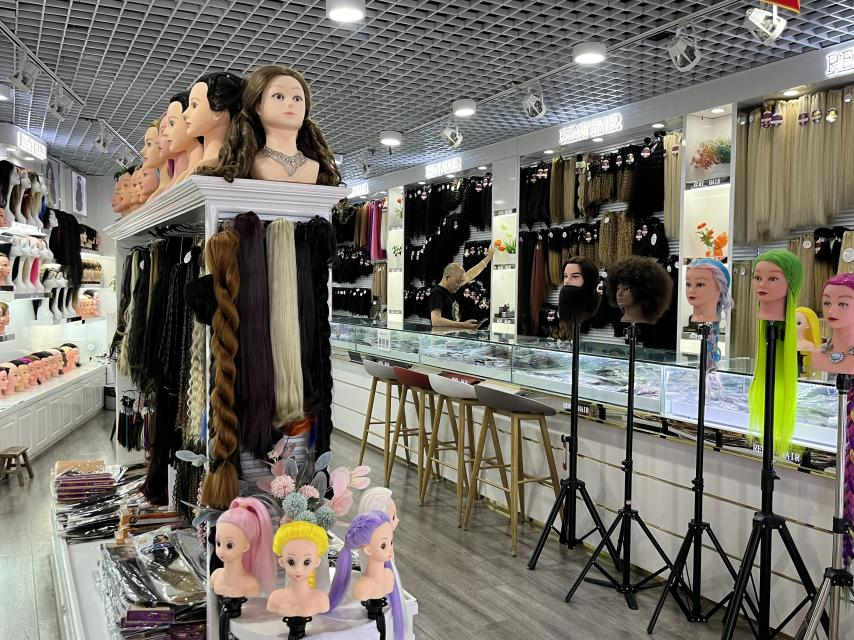
A wig shop in Zone 3 of Yiwu Trade City. Image source: Yiwu Index
(2) A Hundred merchants gather to "develop" and connect the world
The wig industry in Yiwu does not develop in isolation but forms an efficient complement with other wig industrial belts in China. Xuchang, Henan Province, as the largest distribution center for human hair raw materials and a traditional wig production base in China, has gathered over 4,100 hair product enterprises, with more than 300,000 employees, accounting for nearly 7% of the city's permanent resident population. This has formed an industrial ecosystem where "three generations of a family are engaged in the business". It has provided a stable supply of human hair raw materials and mature processing technical support for Yiwu. Yiwu, relying on the global sales network and cross-border e-commerce advantages of the International Trade City, takes over production capacity and expands overseas markets, forming an industrial chain division model of "supply in Xuchang + sales in Yiwu".
(3) The Yiwu wig business of buying from all over the country and selling globally
No matter how unpopular a business is, it never lacks the presence of people from Yiwu. Even the most niche business can be made globally by people from Yiwu. Yiwu Market has transformed the national wig production capacity into global orders through two sales models: one is the "front store, back factory" model. In recent years, many merchants have set up production bases in Yiwu. Through the model of "on-site inspection + quick customization", it meets the high-frequency purchasing demands of foreign merchants for wigs. Second, relying on the sales model of cross-border e-commerce platforms, a wig with a needle-laying technique, after being boosted by live-streaming traffic in Yiwu, can be sold at terminals in Europe and America for up to ten thousand yuan. This model of regional coordinated development has further enhanced the response speed of Yiwu's wig industry to changes in international market demand.
Industry: The practical attribute demand for wigs to cover white hair and bald patches will steadily increase, and the demand for personalized fashion will become increasingly prominent, driving the development of wig products towards a more diverse and comprehensive direction.
Market: The domestic market has seen a significant increase in growth, and the demand for all types of wigs is strong. The share of wig products in North America and Europe will continue to maintain a leading position, while the African market will keep a high growth trend.
Trend: As a typical labor-intensive industry, the development of wigs is highly dependent on mature industrial belts and efficient sales networks. Relying on the domestic industrial belt combined with the sales model in Yiwu, the future development prospects are broad.
As long as humans are still losing their hair, the wig business will never be barren. In the future, enterprises that can grasp the essence of consumption, continuously carry out technological innovation and deeply cultivate brand value will gain the upper hand in this round of industrial upgrading.
—— The content of this article is translated by Al ——
 My favorites