

The kitchen and bathroom hardware industry is accelerating its overseas expansion as "intelligent" manufacturing upgrades global order snatching
Publish Time:2025-11-07 09:04:52Pageviews:365


abstract: In the past, the standard for a good faucet was "to last for ten years without breaking down". Nowadays, a faucet can not only display water temperature in real time and monitor water quality, but also be linked to an APP to record water usage habits, transforming into an "intelligent manager". The speed of industry transformation far exceeds imagination.
In the past, the standard for a good faucet was "to last for ten years without breaking down".
Nowadays, a faucet can not only display water temperature in real time and monitor water quality, but also be linked to an APP to record water usage habits, transforming into an "intelligent manager". The speed of industry transformation far exceeds imagination.
In 2025, the market size of China's kitchen and bathroom hardware industry is approximately 360 billion yuan, with the bathroom hardware sub-sector alone exceeding 200 billion yuan.
In the first four months of 2025, there was an explosive growth in new smart home products, with the number of new types increasing nearly 20 times year-on-year. Among them, the number of new types of smart toilets increased by as much as 793.3% year-on-year.
In this article, Yiwu Index will help you understand the kitchen and bathroom hardware industry.
01
With the continuous expansion of external demand, the kitchen and bathroom hardware industry is embracing a new pattern
In 2025, China's kitchen and bathroom hardware industry will be in a new stage of development, and the demand from emerging overseas markets is becoming the core driving force for the industry's growth. Especially in regions such as the Middle East, Southeast Asia and Latin America, the accelerated urbanization process and infrastructure construction are continuously driving the overseas demand for high-quality and cost-effective kitchen and bathroom hardware products from China. Data shows that the global market size of bathroom hardware reached 128.3 billion US dollars in 2024, and it is expected to maintain a compound annual growth rate of 2.51% over the next five years.
(1) Overseas emerging markets: The urbanization process is accelerating, and the demand is huge
The global urbanization process is constantly advancing, and large cities and megacities are rising rapidly. Data shows that by 2030, there will be 43 megacities with a population of over 10 million worldwide, among which 9 newly added megacities are located in Asia and Africa. By 2050, nearly 70% of the world's population will be living in cities.
The scale of real estate construction in overseas markets has expanded rapidly, and the demand for kitchen and bathroom hardware products is strong. From the perspective of demand structure, external demand mainly comes from four aspects: the continuous advancement of infrastructure, the launch of post-war reconstruction projects, the large-scale construction of commercial complexes, and the urbanization process in emerging markets.

Image source of Dubai's urban construction scene: Internet
The national-level transformation plans represented by Saudi Arabia's "Vision 2030" in the Middle East have driven a large-scale construction wave. For instance, more than 350 star-rated hotels are under construction simultaneously, and there is a huge demand for high-end, durable and luxuriously designed kitchen and bathroom hardware products. Meanwhile, the Middle East is also an important export market for kitchen and bathroom hardware products from Yiwu Market. Its unique food culture and gathering customs have a stable demand for metal tableware. Yiwu enterprises, based on the demands of Middle Eastern customers, have incorporated Islamic cultural elements such as crescent-shaped designs and Arab patterns into their product designs, which have been widely recognized in the Middle Eastern market. According to the monitoring of Yiwu Index, in May this year, the prosperity index of the tableware (metal) category among the kitchen and bathroom hardware sub-categories rose by 291.27 points compared with the beginning of the year, with an increase of 18.02%.
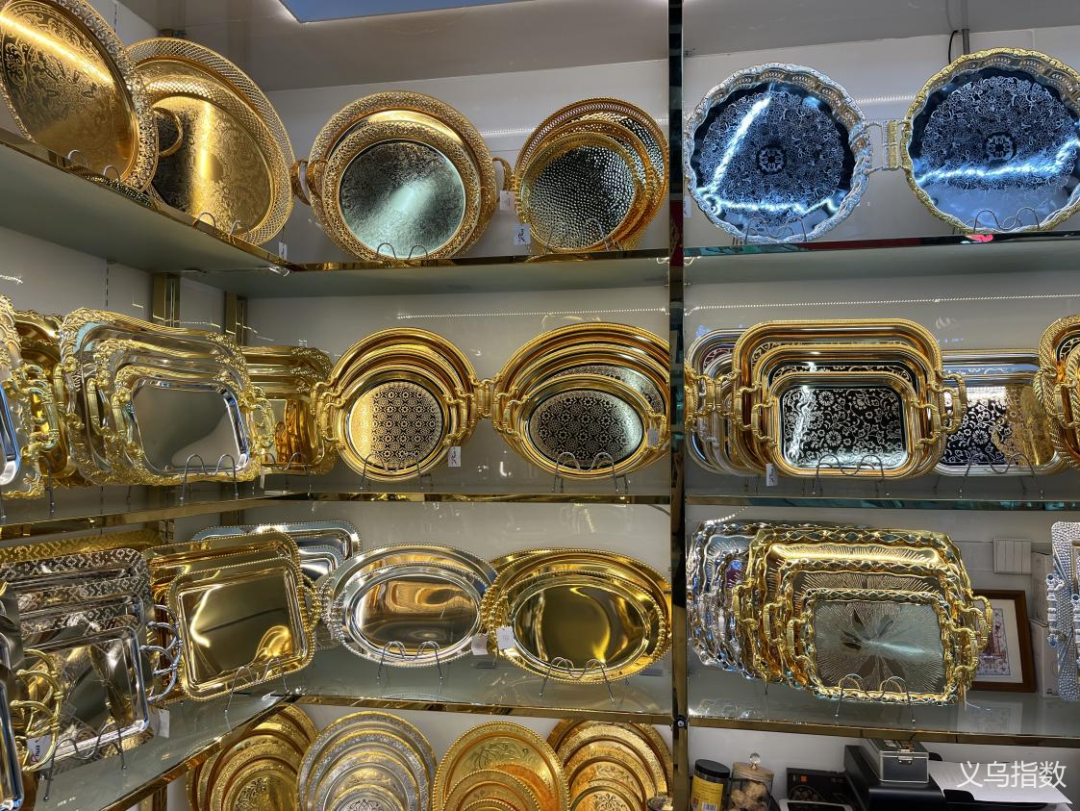
Metal tableware in Yiwu market. Image source: Yiwu Index
Countries in Latin America such as Chile, Argentina and Mexico are actively promoting urban renewal plans, driving up the demand for kitchen and bathroom hardware products. In early 2025, kitchen and bathroom hardware products in the Latin American market witnessed explosive growth. Data shows that during the March New Trade Festival on Alibaba International Station, the order growth rate of bathroom hardware products in Argentina reached 101%, and that in Chile exceeded 70%.
Southeast Asia is currently in a stage of accelerated industrialization and rapid urbanization. Take Vietnam as an example. The huge young population and rapid urbanization process have given rise to a large amount of housing construction and home hardware consumption. The demand for building hardware (such as plumbing fixtures and door and window accessories) and home hardware (such as bathroom accessories) in these markets is highly concentrated. Meanwhile, the unique local climate conditions also make kitchen and bathroom hardware products with high-temperature and high-humidity resistance more popular.
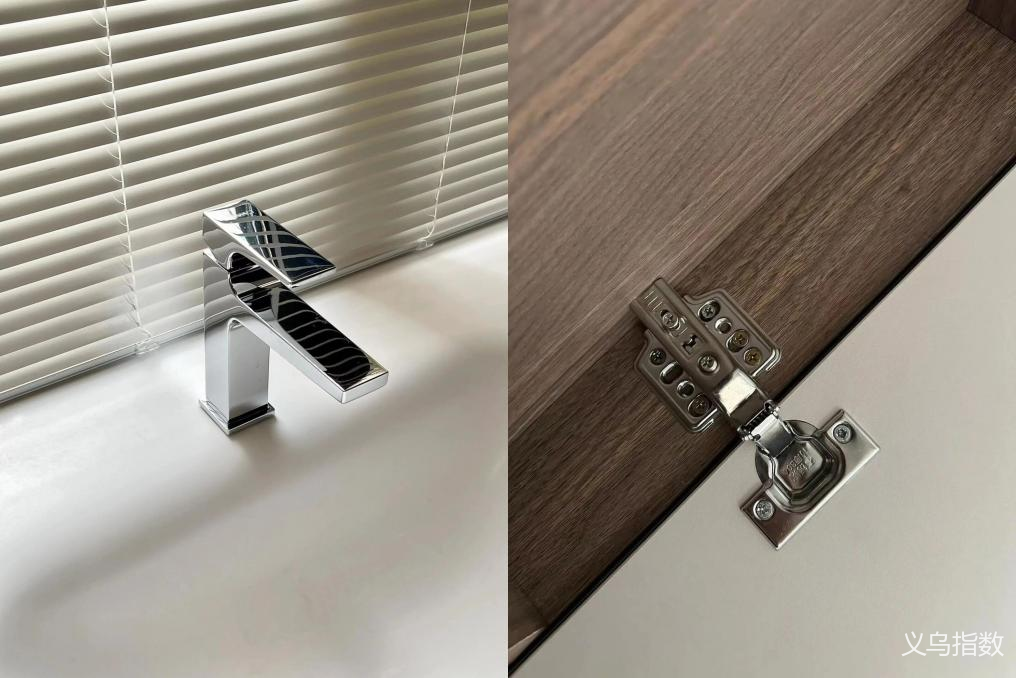
Image source: Yiwu Index for kitchen and bathroom hardware products such as faucets and hinges
(2) Yiwu Market: The foreign trade of kitchen and bathroom hardware industry holds a dominant position
The huge demand for kitchen and bathroom hardware products in overseas markets is in line with the highly export-oriented industry characteristics of the Yiwu market.
After more than 20 years of development, the kitchen and bathroom hardware industry in Yiwu Market now has nearly 1,000 business entities. The ratio of domestic to foreign trade sales is approximately 1:9, and its exports are mainly to many countries and regions in Africa, South America, the Middle East, Southeast Asia, Europe, etc. Liu Junming, the president of Yiwu Kitchen and Bathroom Hardware Industry Chamber of Commerce, said, "Over the past two years, we have gradually upgraded our original individual agency model to a national agency system. Currently, we have established a distribution network consisting of 36 national-level agents worldwide, and our products are available all over the globe."
In addition to offline markets, professional exhibitions are also important channels for Yiwu to gather global merchants and drive order growth. Data shows that this year's Yiwu Kitchen and Bathroom Exhibition gathered over 1,000 exhibitors. Over the course of three days, it attracted a total of 57,928 domestic and foreign buyers, with an intended transaction volume exceeding 700 million yuan. The number of foreign buyers attending the meeting reached 1,824, an increase of 8.31% year-on-year, covering 67 countries and regions including the United Kingdom, Germany, the United States, Peru and Brazil.

Image source of the 2025 Yiwu Kitchen and Bathroom Exhibition: Internet
According to the monitoring of Yiwu Index, since 2020, the prosperity index of kitchen and bathroom hardware in Yiwu market has generally shown a steady upward trend. It rose from 1,040.27 points in 2020 to 1,345.46 points in 2024, an increase of 29.33%.
Yiwu Kitchen and Bathroom Hardware Prosperity Index from 2020 to 2024
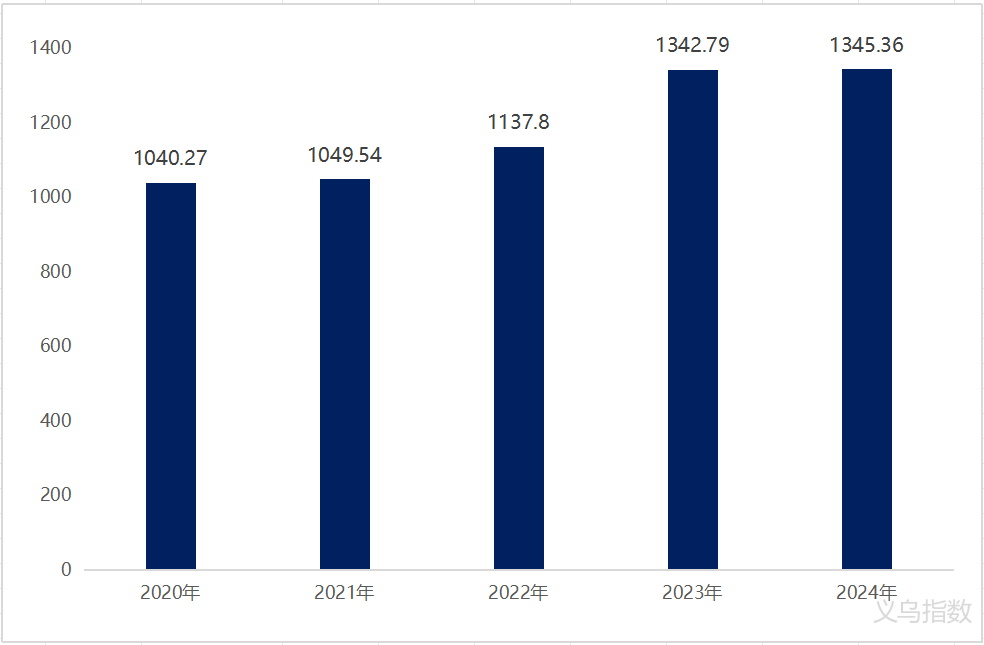
Data source: Yiwu Index
www.ywindex.com
02
Domestic market: Intelligence and branding lead the industry's development
Since 2024, the domestic real estate market has fully entered the era of existing stock. Domestic consumers' demands for kitchen and bathroom hardware products have shifted from "as long as it works" to "experience first". The development trends of intelligence, branding, and environmental protection have become increasingly prominent. Kitchen and bathroom products that combine a sense of technology and aesthetic design are continuously gaining market favor.
Looking back on the development over the past few decades, China's kitchen and bathroom hardware industry has established a complete market system and entered an innovation stage. At present, the accelerated transformation of the industry from "basic configuration" to "renewal of existing stock" not only opens up new growth space but also becomes a core opportunity for Chinese kitchen and bathroom hardware enterprises to leverage their industrial advantages and drive the development of the global industry.
(1) Intelligence: Freeing up hands, kitchen and bathroom Spaces enter the "Intelligent Era"
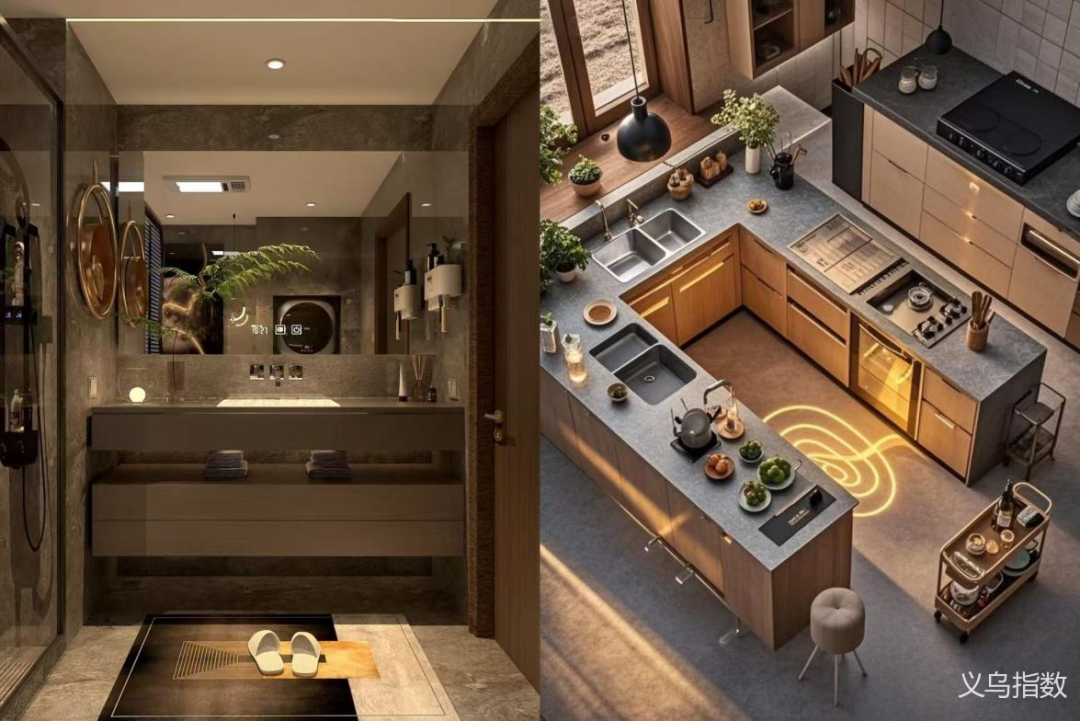
The "lazy economy" continues to heat up, driving home decoration and renovation into an active period, and smart kitchen and bathroom products are experiencing explosive growth. According to the data monitoring of Yiwu Index, from January to April this year alone, 30,000 new types of smart home consumer goods were added in China, with a year-on-year growth rate as high as 1,985.5%. Among them, the number of new types of smart toilets increased by as much as 793.3% year-on-year. Smart bathroom mirrors, sensor faucets, thermostatic shower systems and other kitchen and bathroom products have become new favorites in the market, driving up the sales of kitchen and bathroom hardware accessories and related products. Meanwhile, the demand from the consumer end remains strong. Research data shows that 72.51% of respondents use smart products at home. Among them, consumers in second-tier and lower cities are more enthusiastic about purchasing smart devices to try them out, especially products such as vacuum cleaners, smart toilets, and smart kitchen appliances.
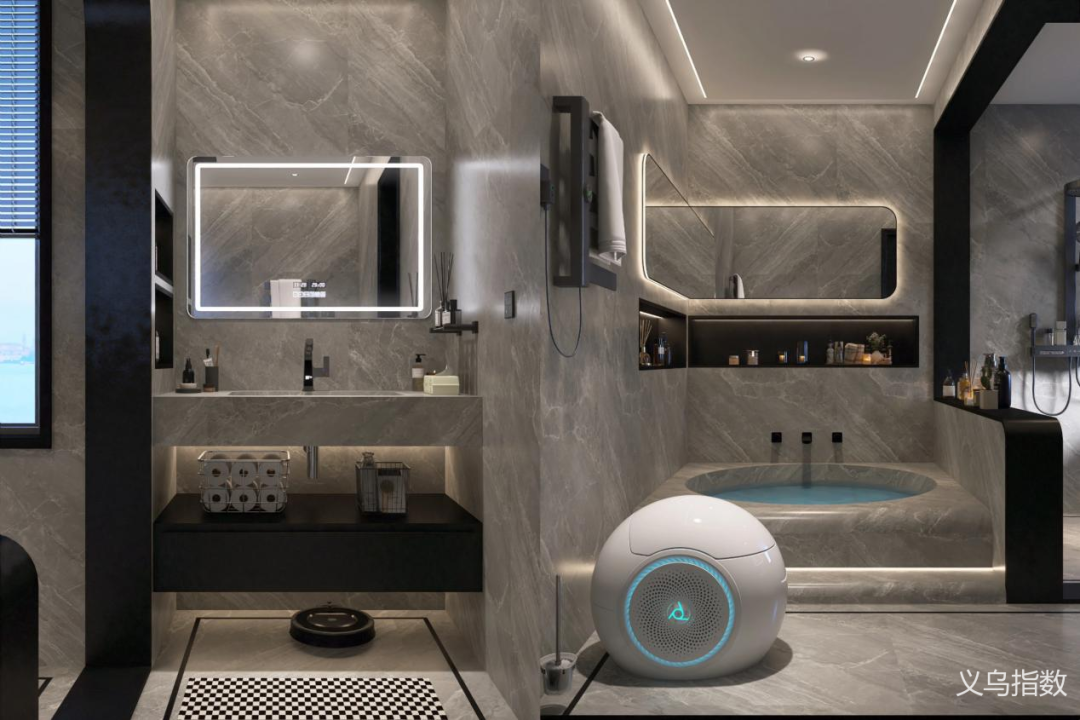
Smart bathroom space image source: Yiwu Index
President Liu said, "Intelligent kitchen and bathroom products are also very popular in overseas markets. For instance, there is a multi-functional smart faucet that integrates digital temperature display, shower head, and cold and hot water distribution. We have specially developed it for the Central Asian market, which has solved the problem of difficult cleaning of kitchen oil stains there and has a good repurchase rate."
(2) Branding: Farewell to the "anonymous" era, domestic brands accelerate their overseas expansion
After decades of development, domestic kitchen and bathroom brands represented by JOMOO, Arrow, Hengjie and Huida have completed their initial brand accumulation in the domestic market. At present, these enterprises are shifting their strategic focus to brand globalization and product upgrading. Through specific measures such as setting up international R&D centers, acquiring overseas brands, and launching high-end product lines, they are accelerating their penetration into the mid-to-high-end market and gradually seizing market share from foreign brands.
Meanwhile, a number of enterprises that have grown up from industrial belts are also accelerating their pace of branding. Take the Yiwu market as an example. Some representative enterprises, relying on the production and manufacturing capabilities and supply chain integration experience accumulated over a long period of OEM production, are accelerating their transformation from OEM production to building their own brands. For instance, the local brand "FIRMER" from Yiwu has registered trademarks in nearly 120 countries around the world, and its products are exported to 175 countries and regions.
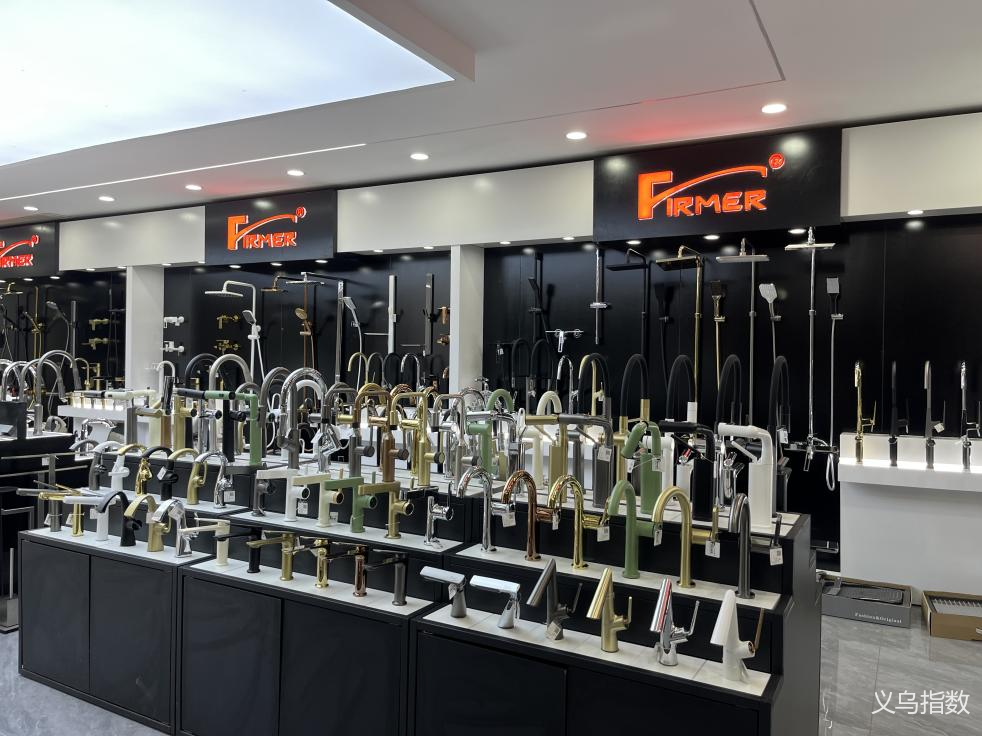
The image source of the "FIRMER" brand products in Yiwu Market: Yiwu Index
(3) Green and environmentally friendly products have become new quality competitiveness
Driven by the concept of sustainable development, environmental protection and health have become the core values of products. New materials and processes such as low-lead faucets, chromium-free passivation surface treatment, and recycled metal materials have become the key to differentiating kitchen and bathroom hardware products from the source, ensuring water safety and environmental friendliness. They have also become an important path for brands to increase added value and build consumer trust. At the 2025 Yiwu Kitchen and Bathroom Exhibition, a buyer from Iraq reached a purchase order worth 500,000 yuan with exhibitors, specifically for brass faucets with water-saving certification to be used in a high-end apartment project in Baghdad. More and more enterprises are integrating environmental protection commitments throughout the entire product life cycle, driving the industry towards a healthier and more sustainable future.
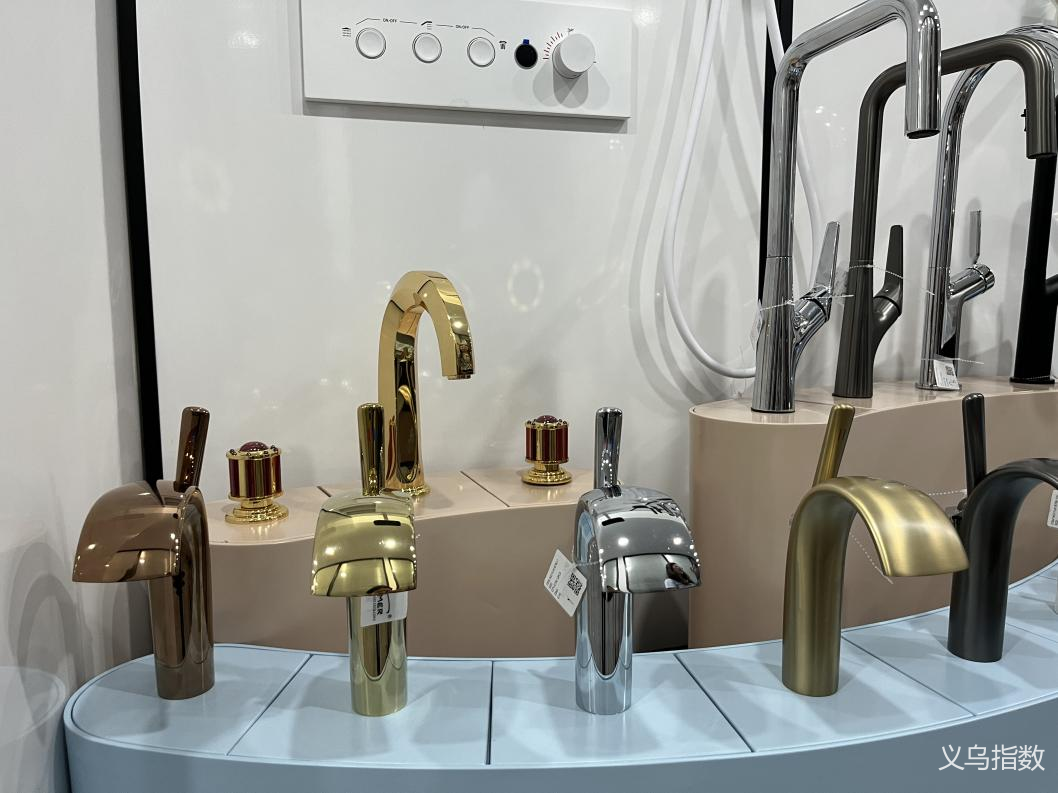
Brass faucet Image source: Yiwu Index
03
The dual test of raw material and logistics costs
(1) Fluctuations in raw material prices squeeze profit margins
In recent years, the prices of major raw materials in the upstream of the kitchen and bathroom hardware industry have fluctuated significantly. The prices of non-ferrous metals such as copper, aluminum, zinc and nickel, as well as raw materials like stainless steel, fluctuate frequently due to factors such as macroeconomics, geopolitics and supply and demand relationships.
Take copper as an example. Recently, the copper price has been fluctuating at a high level. The global copper market supply has tightened due to the sudden "black swan" event. On October 16th, the domestic spot copper price was reported at 86,350 yuan per ton. At the beginning of the year, the domestic spot copper price was 72,530 yuan per ton, with an increase of 19.05% so far this year.
Average domestic spot copper price from 2020 to October 10, 2025 (Unit: yuan/ton)
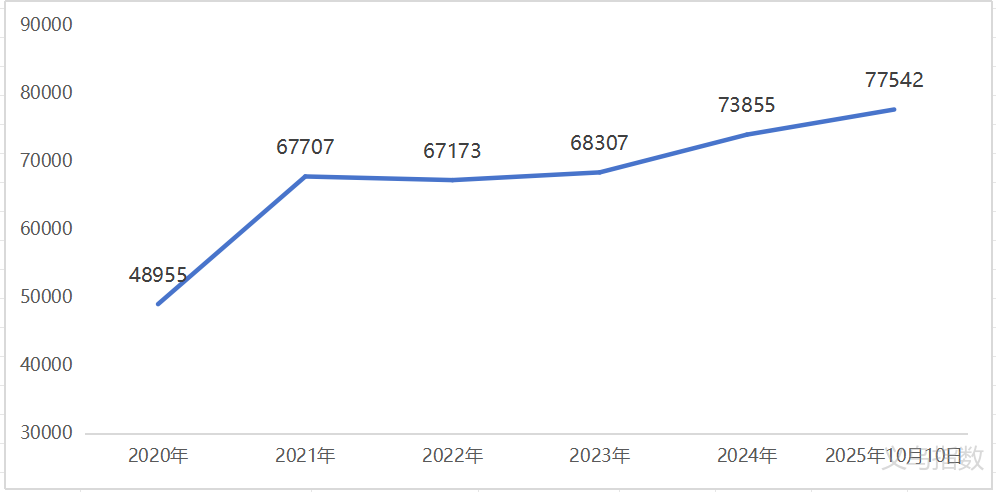
Data source: Luobo Research; Yiwu Index
www.ywindex.com
The kitchen and bathroom hardware industry, as a typical "heavy materials and light industry" sector, has core raw materials such as copper, stainless steel, zinc alloys and engineering plastics accounting for a relatively high proportion of product costs. Therefore, the price fluctuations in the raw material market will be rapidly transmitted to the production stage, directly pushing up the manufacturing costs of kitchen and bathroom hardware products, and possibly squeezing a certain profit margin.
(2) High and uncertain international freight rates have restricted the pace of brands going global
As an export-oriented industry, kitchen and bathroom hardware products are particularly constrained by international logistics costs, which is closely related to the transportation characteristics of their products. Core categories such as shower heads, shower enclosures, and sinks generally have the characteristics of large volume and heavy weight. Some stainless steel cabinets weigh over 15 kilograms per piece, while the length of integrated bathroom modules often exceeds 6 meters. It falls within the category of "oversized cargo" in maritime transportation and is subject to additional costs and capacity constraints.
In recent years, global ocean freight rates have remained at a high level, and problems such as tight shipping space and extended transportation cycles have occurred frequently. The rising export costs of kitchen and bathroom hardware products have led to uncertainties in the order delivery cycle, which may bring additional resistance and risks to the industry's overseas expansion.

Image source of Ningbo Zhoushan Port: Internet
Summary
The release of the demographic dividend and the accelerated urbanization process in global emerging markets have opened a window of opportunity for China's kitchen and bathroom hardware industry. Domestic kitchen and bathroom hardware products have been making continuous breakthroughs in the fields of intelligence and high-end, and their potential for going global is becoming increasingly prominent. In the future, through the triple empowerment of product upgrading, channel expansion and brand value, China's kitchen and bathroom hardware industry will further consolidate its core competitiveness and is expected to truly achieve a qualitative change from "Made in China" to "Global Leadership".
—— The content of this article is translated by Al ——
 My favorites