

Uzbekistan: The heart of Central Asia, the largest export market for Yiwu small commodities in Central Asia
Publish Time:2026-03-18 15:28:30Pageviews:130


abstract: As the most populous country in Central Asia and the only one that borders all Central Asian countries, Uzbekistan is not only a considerable consumer market but also a core regional logistics distribution hub in Central Asia. For Yiwu, it is not merely a destination but also a gateway to the consumer market in Central Asia.
When it comes to Central Asia, a string of names with the word "Stan" always goes viral. In Persian, "Stan" originally means "..." "Land" or "..." The place where they live, and Uzbekistan is the hardcore powerhouse among this group of "Stan".
It is located in the center of Central Asia, bordering all the Central Asian countries and is one of only two "double landlocked countries" in the world.
After Uzbekistan's "reform and opening up" in 2017, its economy has been developing at an accelerated pace. The GDP is expected to exceed 130 billion US dollars in 2025, with a year-on-year growth of 7.7%. The trade volume of imports and exports reached 81.2 billion US dollars, increasing by more than 20% year-on-year.
Meanwhile, it is also the largest export destination of Yiwu in Central Asia. By 2025, Yiwu's exports to it will reach 3.7 billion yuan, accounting for 51% of its total exports to the five Central Asian countries.
This issue of the Yiwu Index takes you to Uzbekistan.
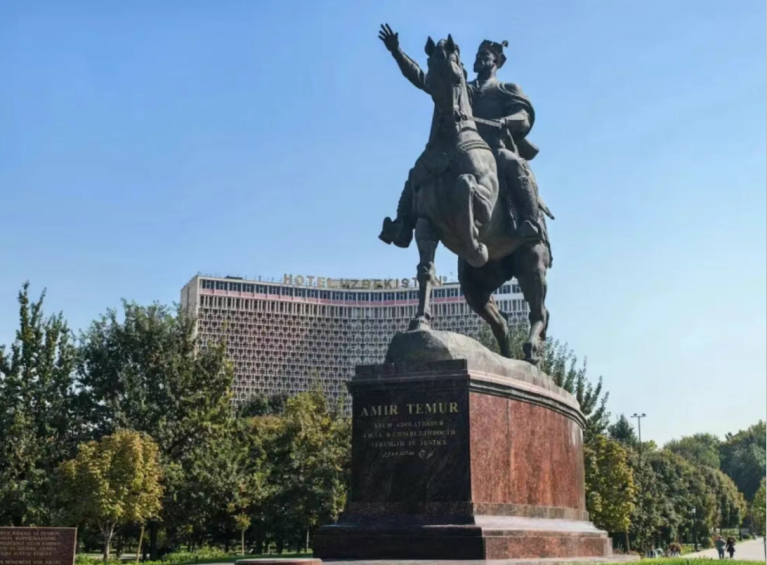
01
Country Overview: The Rapidly Growing "Heart of Central Asia"
Among the five Central Asian countries, Uzbekistan is undoubtedly the dual core of population and economy - its population size far exceeds that of the other four countries, and its economic growth rate has remained above 5% for many consecutive years. It is gradually getting rid of its reliance on resources such as cotton, gold and natural gas, and is developing in a diversified way towards industry, services and digital economy.
1. Geography: The crossroads of Central Asia
Uzbekistan is located at the ";crossroads"; of Central Asia. It is the geographical center of Central Asia and a key node for land connection between Europe and Asia. Samarkand and Bukhara were once the distribution centers of goods and cultures between the East and the West. It is the only country in Central Asia that borders four other Central Asian countries (Kazakhstan, Kyrgyzstan, Tajikistan and Turkmenistan) and Afghanistan, with a border line of 6,600 kilometers. It naturally enjoys the geographical advantage of radiating throughout Central Asia.
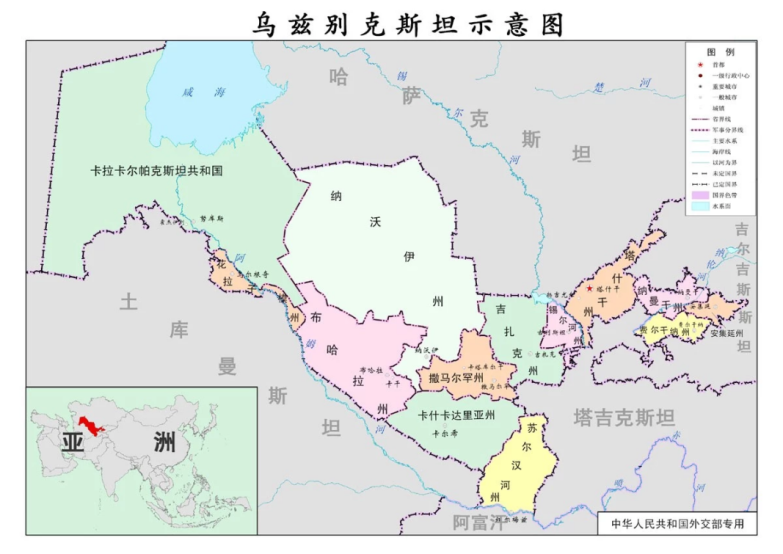
However, Uzbekistan and all its neighboring countries have no access to the sea. Therefore, railway logistics is becoming the key to breaking the deadlock: The China-Kyrgyzstan-Uzbekistan railway is under full-scale construction. Once completed, it will open up a land passage from Kashgar, China to Andijan, Uzbekistan, significantly shortening the trade time between China and Europe. The regularly operated China-Europe Railway Express has become a golden channel for Chinese goods to enter Central Asia.
2. Population: As the most populous country in Central Asia, the young demographic dividend is prominent
Uzbekistan is the most populous country in Central Asia, with a total population of nearly 38 million, accounting for nearly half of the total population of the five Central Asian countries. Meanwhile, Uzbekistan's population is characterized by high growth, youth and concentration, providing a continuous driving force for the growth of the consumer market.
Over the past five years, Uzbekistan's population has increased by more than 700,000 annually. By 2025, the population growth rate is expected to be approximately 2%, which is higher than the global average (about 0.8%). The age of the population is approximately 29 years old. The population under 30 years old accounts for about 60% of the total population, among which the population under 14 years old makes up about 30%. This is not only a huge labor reserve but also the absolute main force in the consumer market for the next 10 to 20 years.
The population of Uzbekistan is concentrating in the east and the urbanization process is accelerating. The eastern and central regions are rich in oases and river valleys, with a dense population. Among them, the Fergana Basin, which accounts for only 10% of the country's land area, is home to about one-third of the nation's population. In contrast, the west is mostly desert, with vast land and sparse population. The population of Tashkent, the capital, has exceeded 3 million. It is one of the core cities in Central Asia and has formed a consumption radiation circle centered on the capital and other core cities.
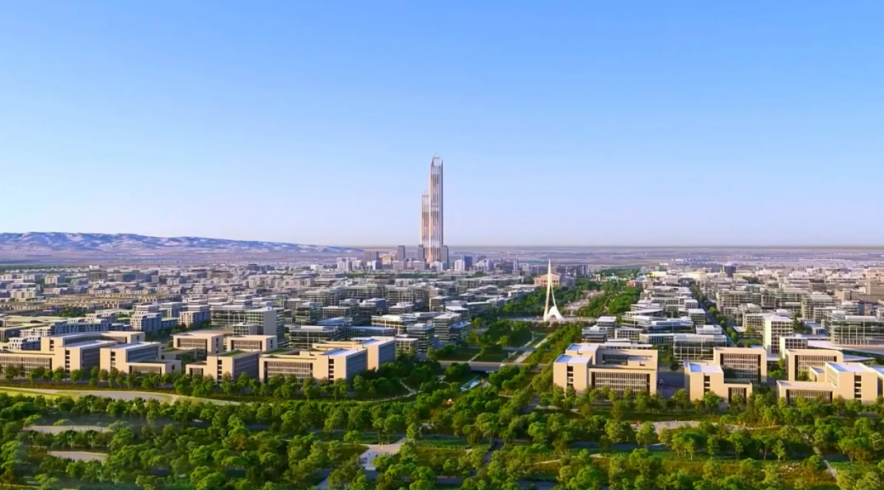
Tashkent, the capital of Uzbekistan. Image source: Internet
3. Economy: From "Cotton and Gold Dependence" to "Diversified Breakthrough"
Uzbekistan is one of the countries with relatively fast economic growth in Central Asia. Its GDP growth rate is expected to be 5.5% or above from 2021 to 2024. Its economic volume ranks second among the "Five Central Asian Countries", only after Kazakhstan.
However, before 2016, Uzbekistan was regarded as one of the most closed countries in Central Asia, having long been in a state of diplomatic isolation and having tense relations with some of its neighboring countries. The visa policy is strict, foreign exchange is strictly controlled, the Internet and social media are restricted, and the international community has limited understanding of it.
Around 2016, Uzbekistan was confronted with multiple internal and external pressures, and its original development model was no longer sustainable. Externally, the decline in global commodity prices and the shrinking demand from major trading partners such as Russia have led to a significant drop in exports, with remittance income plummeting by approximately 40%. Internally, over 8,000 state-owned enterprises dominate the economy, the system is rigid, the development of the private economy is restricted, and employment pressure keeps accumulating. Kazakhstan, a neighboring country, has taken the lead in promoting opening up, while Uzbekistan still implements strict foreign exchange control and has a lagging business environment, which makes foreign investors hesitate.
In 2017, Uzbekistan broke through with economic liberalization: starting from foreign exchange reform, it expanded to trade, taxation and business operation systems. The free convertibility of currency and the optimization of the business environment have been successively implemented, and the country has shifted from a closed system to an open market economy.
Today, under the dual drive of "reform" and "opening up", Uzbekistan's economic growth maintains strong resilience. Its economy achieved a record growth in 2025, with GDP exceeding 130 billion US dollars for the first time. The actual economic growth rate was approximately 7.7%, surpassing the previous highest growth rate of 7.4% in 2021. The per capita GDP exceeded 3,881 US dollars, growing by 5.7% and maintaining a steady growth momentum.
Uzbekistan's GDP (in billions of US dollars) from 2017 to 2024
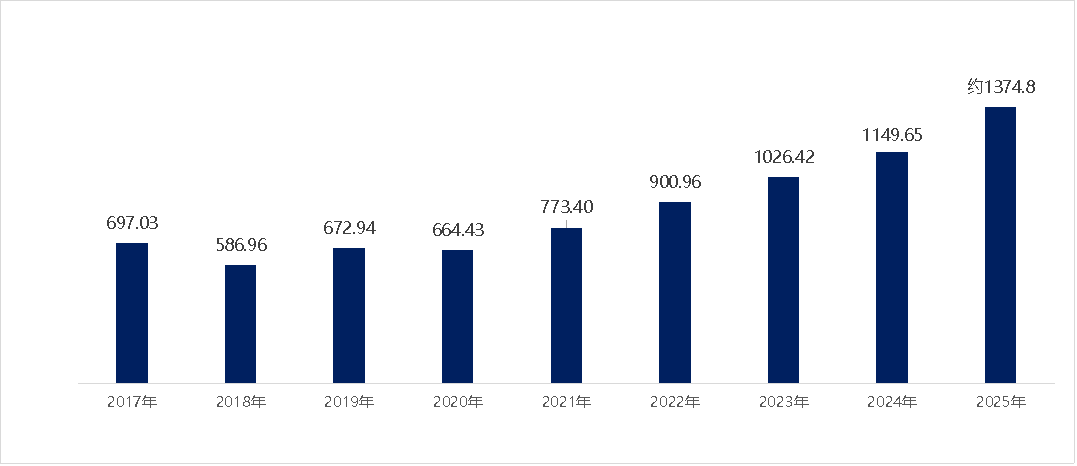
Data source: World Bank
www.ywindex.com
Meanwhile, since the reform, Uzbekistan has been constantly optimizing its industrial structure and fostering new economic growth poles, gradually breaking the industrial pattern that relied on a single resource.
The "Four Golds" are the pillar industries of the economy: gold, "white gold" (cotton), "black gold" (petroleum), and "blue gold" (natural gas). The "Four Golds" are the traditional pillar industries of the national economy. In 2024, the export value of these four products will account for approximately 50% of the total national export value. Uzbekistan has a total mineral resource reserve value of approximately 3.5 trillion US dollars. It is one of the world's major gold and natural gas producers, and also the sixth largest cotton producer and the second largest cotton exporter in the world. Its cotton output ranks first in Central Asia, accounting for about 65% of the total cotton output in Central Asia. In the light textile sector, there are over 3,500 textile enterprises and more than 4,700 garment enterprises. Have a certain textile production capacity.
The service industry is the main driver of economic growth: By 2025, the output value of the service industry will exceed 56 billion US dollars, increasing by 8.7% year-on-year, and its contribution rate to GDP growth will be approximately 50%. Information and communication, as well as tourism, have become new growth poles, significantly unlocking the potential of the digital economy.
Industry is the core driving force for economic growth: In 2025, Ukraine's industrial output value was approximately 90.2 billion US dollars, increasing by 6.8% year-on-year, with manufacturing accounting for 86%. The manufacturing output of Ukraine mainly consists of food, textiles and various types of motor vehicles, which account for more than 50% of the total manufacturing output. Ukraine is the earliest country in Central Asia to produce automobiles and also the one with the most mature automotive industrial chain.
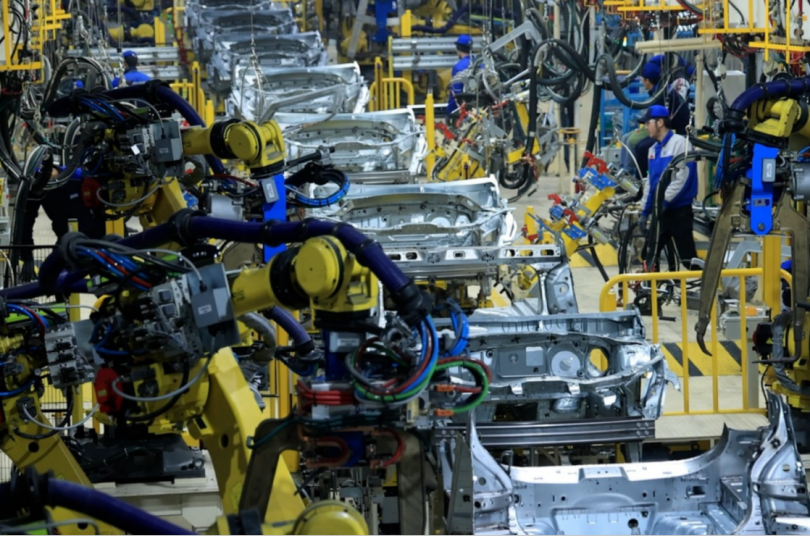
The production line diagram of UzAuto Motors' Asaka automobile plant, the largest automotive manufacturing base in Uzbekistan, source: Internet
02
Trade: A New Node of the Silk Road from "closed and introverted" to "Open Hub"
Uzbekistan has transformed its disadvantage as a "dual landlocked country" into a hub advantage by advancing infrastructure upgrades and institutional reforms simultaneously. Connect the Angling-Papu Railway, build the China-Kyrgyzstan-Uzbekistan Railway, upgrade the cross-Afghanistan Corridor, and open up regional channels. At the same time, efforts should be made to promote currency liberalization, tax reduction and customs clearance facilitation, lower cross-border costs, and shift from being "restricted at sea" to becoming a transshipment center in Central Asia.
With the adjustment of systems and the improvement of infrastructure, the country has shifted from a relatively closed and inward-oriented development model in the past to a new stage that is more open and actively integrates into regional and global markets. Trade vitality has been continuously released and the country has entered a period of rapid growth.
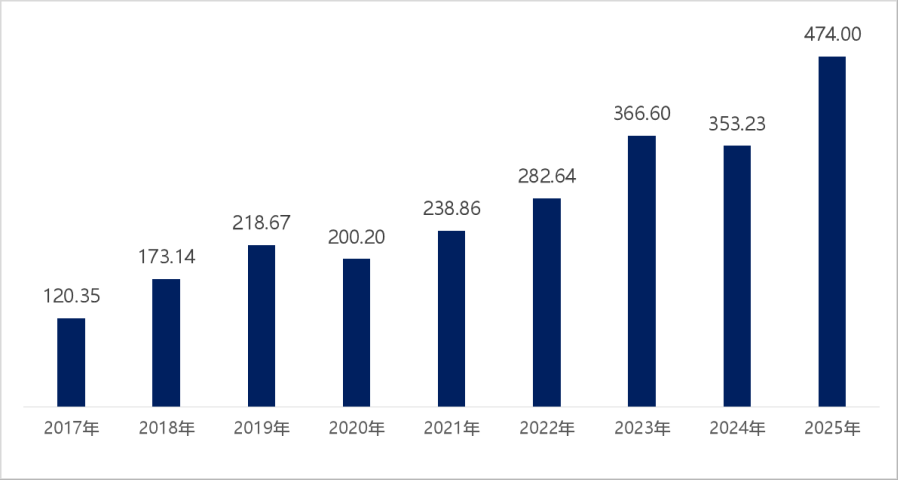
Uzbekistan's foreign trade volume is expected to reach 81.2 billion US dollars in 2025, an increase of 13.9 billion US dollars over the previous year, with a growth rate of 20.7%. Among them, the export volume reached 33.8 billion US dollars and the import volume reached 47.4 billion US dollars.
Since the reform in 2017, the volume of imports and exports in Uzbekistan has significantly expanded. The import value has increased from 12 billion US dollars to 47.4 billion US dollars, an increase of nearly three times.
Uzbekistan's import value from 2017 to 2025 (in billions of US dollars)
Data source: United Nations Commodity Trade Data
www.ywindex.com
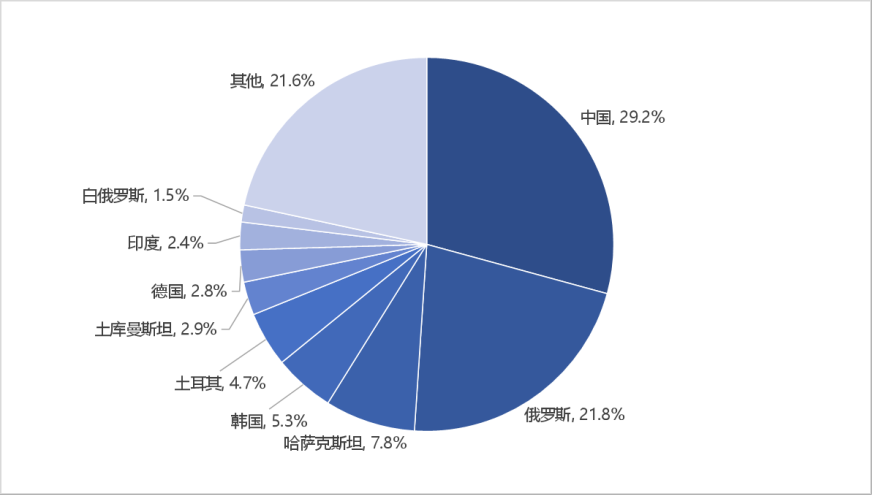
From the perspective of the main source countries of imports, the top three regions for Uzbekistan's imports in 2024 are China, Russia and Kazakhstan, accounting for 29.2%, 21.8% and 7.8% respectively.
The main source countries of imports for Uzbekistan in 2024
Data source: United Nations Commodity Trade Data
www.ywindex.com
2. Trade between China and Uzbekistan: Deep two-way binding
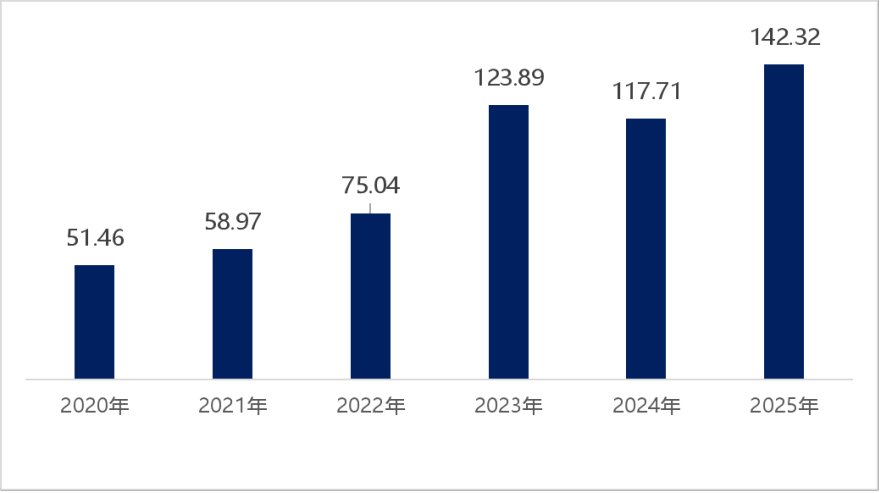
China has long been Uzbekistan's largest trading partner. In 2025, the bilateral trade volume between the two countries is approximately 16.1 billion US dollars, of which China's exports to Uzbekistan are about 14.23 billion US dollars and imports from Uzbekistan are about 1.87 billion US dollars.
China's exports to Uzbekistan from 2020 to 2025 (in billions of US dollars)
Data source: Chinese Customs
www.ywindex.com
China's exports to Uzbekistan are centered on industrial products, mainly covering mechanical equipment, transportation equipment, electronic and electrical products, etc. They are important inputs for the upgrading of Uzbekistan's manufacturing industry and infrastructure construction.
China's imports from Uzbekistan mainly consist of resource products and primary processed goods, covering copper and other minerals, cotton and other agricultural products, as well as some low-processing industrial products.
03
Small commodity market: A New Blue Ocean in Central Asia under the Demographic Dividend
Uzbekistan is one of the most promising consumer markets in Central Asia. With a population base of nearly 38 million, a young demographic structure, and a continuously expanding emerging middle class, coupled with a weak local manufacturing industry and a high reliance on imports for small commodities, it has become a blue ocean market for the continuous growth of small commodity consumption demand.
In 2024, the national retail trade volume reached 32 billion US dollars, increasing by 9.9% year-on-year. Based on the analysis of the local consumer market by the Yiwu Index, the market data of categories such as beauty and personal care products, electronic products, stationery, and toys are impressive, and it is expected that there will be considerable room for growth in the future.
Beauty and personal care: The market size is expected to be approximately 1.016 billion US dollars in 2024. Young consumer groups and the middle class are driving the growth of sub-categories such as cosmetics and skin care.
Electronic products category: In 2024, the sales volume of consumer electronics is approximately 6.5 million units (with a year-on-year growth of about 25%), and the demand for electronic accessories such as mobile phone accessories, Bluetooth headphones, and power banks has increased significantly.
Stationery category: With the popularization of basic education, stationery consumption in Uzbekistan has been steadily increasing. There is a strong demand for small items such as ballpoint pens, notebooks, folders and student schoolbags.
Toys category: It is expected that the new scale will increase by 190 million US dollars from 2025 to 2030, with a compound annual growth rate of 8.3%. Plush toys, building blocks, and children's painting sets are the best-selling categories.
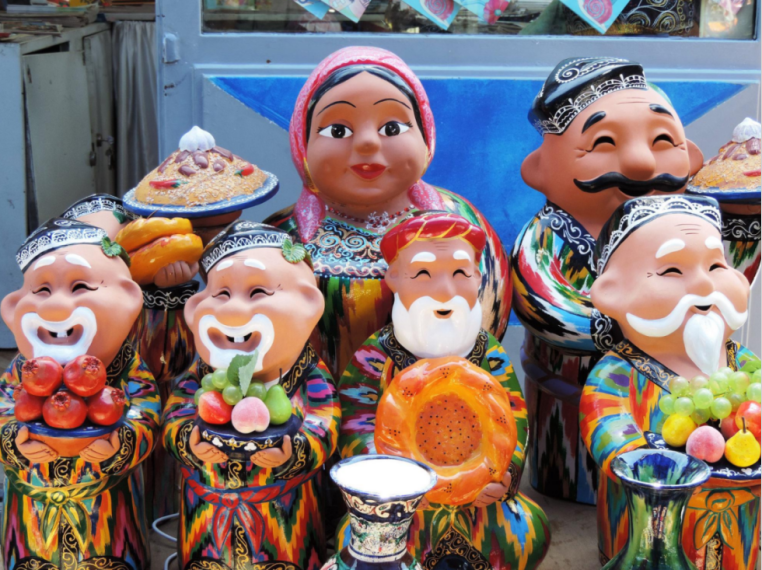
Image source of traditional Uzbek clay figurine toys: Internet
1. Offline market: Concentrated in core cities, undergoing modernization transformation
The small commodity wholesale industry in Uzbekistan is in a stage of vigorous development, especially in the capital Tashkent and other major cities, where traditional markets and modern wholesale models are intertwined and integrated. Some markets are gradually transforming from traditional market-type wholesale to more standardized modern trade centers.
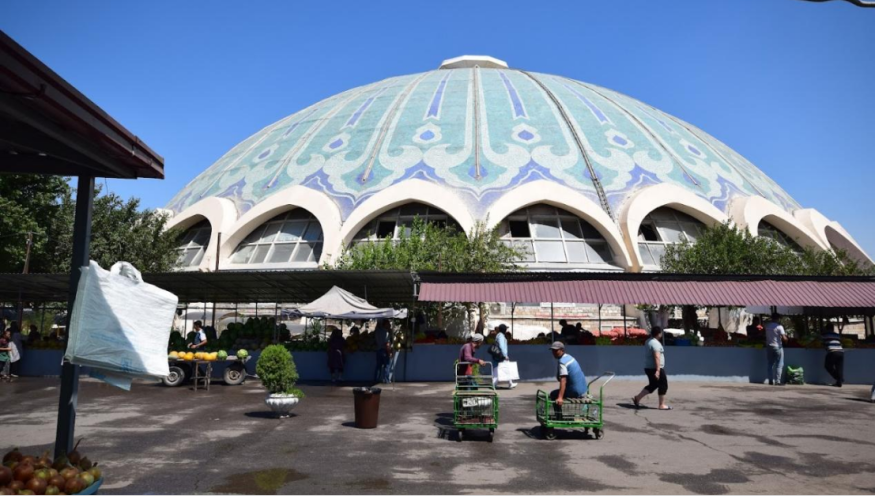
Tashkent Wholesale Market
Tashkent Wholesale Market (Tashkent Wholesale Market) : Located in the capital Tashkent, it enjoys a superior geographical location and convenient transportation. It is one of the important commodity distribution centers in Central Asia. The market covers a vast area and includes various categories of goods, such as textiles, household appliances, toys, and daily household sundries.
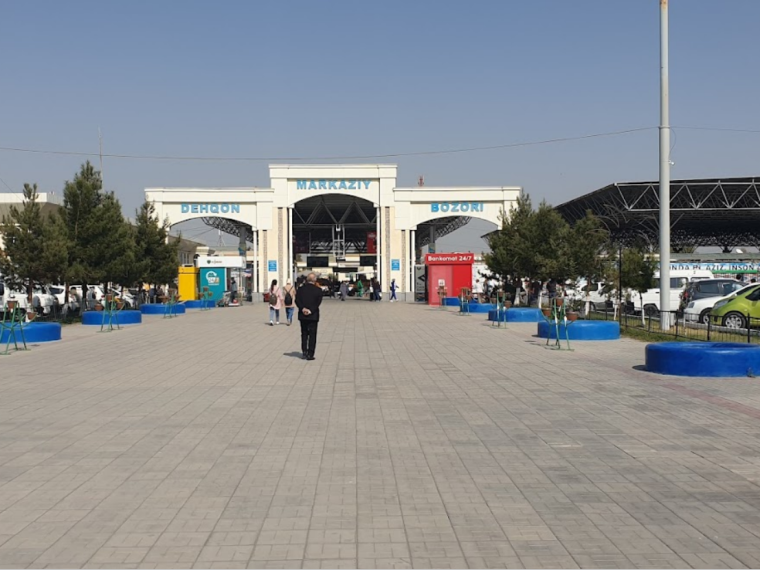
Fergana Bazaar
Fergana Bazaar: It is a large wholesale market in the east of Uzbekistan, attracting a large number of small traders from neighboring countries to come and purchase. The market is large in scale, covering the wholesale of various small commodities and serving as an important hub for cross-border trade. The main products include clothing, textiles, household goods, small household appliances, food, etc.
2. E-commerce: A period of rapid growth led by domestic platforms
In 2024, the e-commerce market size in Uzbekistan was 1.2 billion US dollars, accounting for 3.8% of the retail market. By 2027, the penetration rate of the e-commerce market will reach 9% to 11% of that of the retail market, and the market size will be between 1.8 billion and 2.2 billion US dollars.
The e-commerce platform landscape in Uzbekistan shows a characteristic where local platforms take the lead and international platforms gradually penetrate. Uzum is the largest digital ecosystem in the country, covering e-commerce platforms, fintech and logistics services, with an average daily order volume of over 100,000. Other local platforms include Asaxiy, Olcha and Glotr. The major international e-commerce platforms operating in Uzbekistan include AliExpress (China), Wildberries (Russia), Yandex (Russia), and Ozon (Russia).
The main e-commerce platforms in Uzbekistan
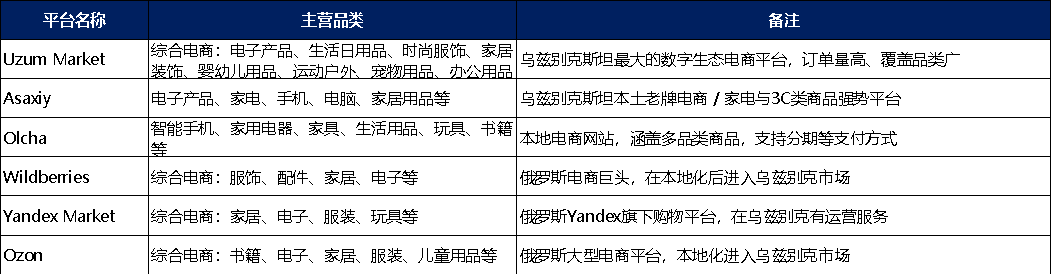
Source of information: Collation of public information
www.ywindex.com
3. Yiwu Small Commodities: The Belt and Road Initiative has driven the steady growth of trade
Uzbekistan is the top export destination for Yiwu in Central Asia. By 2025, Yiwu's exports to Uzbekistan will account for 51% of its total exports to the five Central Asian countries. In recent years, the trade volume between Yiwu and Uzbekistan has shown a steady growth trend. According to the monitoring of Yiwu Index, in 2025, Yiwu's export volume to Uzbekistan exceeded 3.7 billion yuan, an increase of nearly 14% compared with 2024.
Yiwu's export volume to Uzbekistan from 2024 to 2025 (in billions of yuan)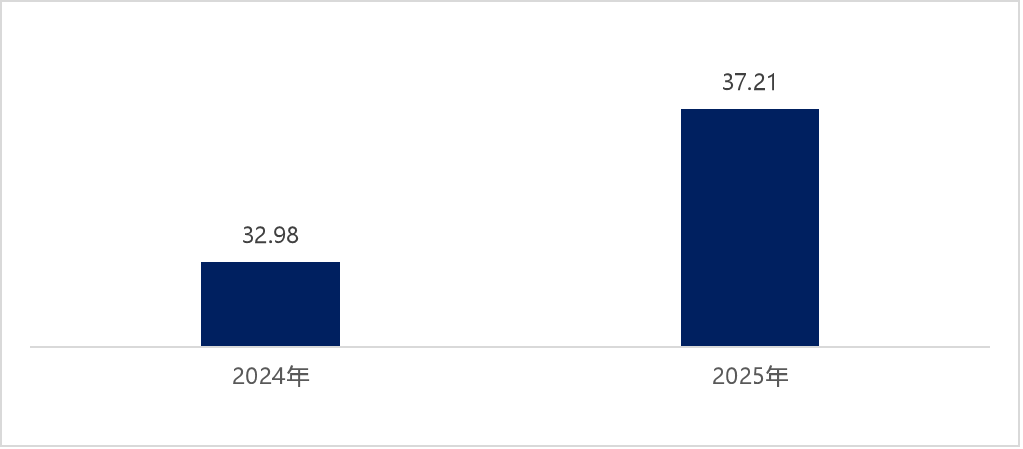
Source: Yiwu Index
www.ywindex.com
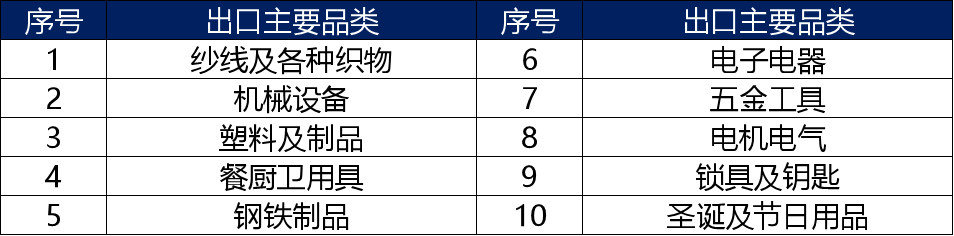
From the perspective of the main export categories from Yiwu to Uzbekistan, yarns and various fabrics, plastics and their products, kitchenware and bathroom utensils, electronic appliances, Christmas and festival supplies are the main commodity categories that Yiwu has exported to Uzbekistan in recent years.
The main categories of goods exported from Yiwu to Uzbekistan
Source of information: Collation of public information
www.ywindex.com
Bilateral trade has grown steadily, thanks to the complementary upgrading of logistics channels. TIR road transportation enables "one document for customs clearance and one vehicle for direct delivery", with a delivery time of approximately 8 days from Yiwu to Tashkent and a cost reduction of 30%. The China-Europe Railway Express Express Line, relying on combined rail and road transport, has reduced the delivery time to 6 to 8 days.
04
Risk
During the rapid development period of Uzbekistan's accelerated opening up and structural reform, the process of institutional reconstruction and marketization was advanced simultaneously. The transitional stage was inevitably accompanied by certain macro fluctuations and business risks.
Inflation and exchange rate fluctuation risks. The inflation rate is expected to be around 7.3% in 2025 and is projected to reach the 5% target only in 2027. This means that for at least the next two years, traders will face an operating environment where procurement costs, logistics expenses and terminal pricing continue to rise. During the same period, the Sum appreciated by 6.9% against the US dollar. The combination of high inflation and a strong domestic currency has put pressure on enterprises' pricing, capital turnover and supply chain management, and the overall business uncertainty has increased.
Tax compliance risks are prominent. The tax law system in Uzbekistan undergoes frequent dynamic adjustments, with policy changes covering tax rates, tax incentives, and collection and management rules, significantly increasing the difficulty for enterprises to comply. Key adjustments in recent years include: the value-added tax will be reduced to 12% in 2023; The 0% corporate income tax preference for exported goods will be abolished in 2025. In 2026, the preferential policies for online business of e-commerce will be abolished, while the digitalization of tax collection and administration will continue to be strengthened. If enterprises fail to adapt in a timely manner, they are prone to deviations in tax burden calculation and non-compliant declaration, facing risks such as fines and goods detention, and their profit margins will be compressed.
Cultural differences and language barriers can easily magnify the risks of foreign trade delivery and performance. The official language of Uzbekistan is Uzbek. Russian is widely used, but the popularity of English is low. The business environment emphasizes relationships, offline communication and business etiquette. The cultural background of the Muslim community requires that products and promotions be well adapted to religious customs. Packaging containing elements of pork and alcohol is often required to be rectified. Enterprises should conduct research on the local customs and traditions in advance, carefully draft contracts, and must not easily believe oral promises.
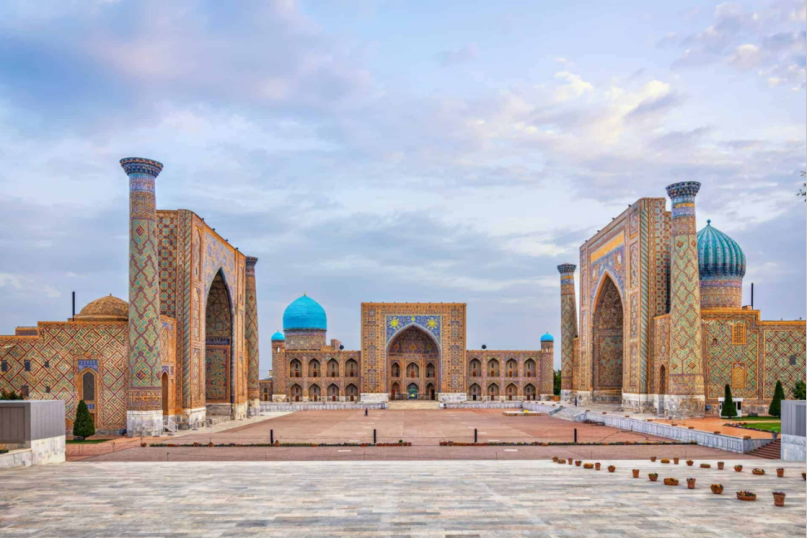
Registan Square in Samarkand is the most representative building complex of the Silk Road in Uzbekistan. Source: Internet
Written at the end
As the most populous country in Central Asia and the only one that borders all Central Asian countries, Uzbekistan is not only a considerable consumer market but also a core regional logistics distribution hub in Central Asia. For Yiwu, it is not merely a destination but also a gateway to the consumer market in Central Asia.
—— The content of this article is translated by Al ——
 My favorites