

The first lesson for brand going global: Learn to avoid pitfalls first, then consider making money
Publish Time:2025-11-03 14:10:38Pageviews:494


abstract: Going to sea is a high-risk expedition. If the direction is wrong, all efforts will be in vain.
Going to sea is a high-risk expedition. If the direction is wrong, all efforts will be in vain.
The model that can succeed in China by "emphasizing operation to capture the market" may lead to losses overseas.
Relying on the Chinese market for a sense of security may instead cause one to miss out on genuine market opportunities.
Selling only low-priced goods without building a brand will eventually be replaced by even lower-priced products...
This article sorts out the six most common misunderstandings that enterprises fall into when going global. Understanding these lessons learned at the cost of real money is helping your business avoid pitfalls.
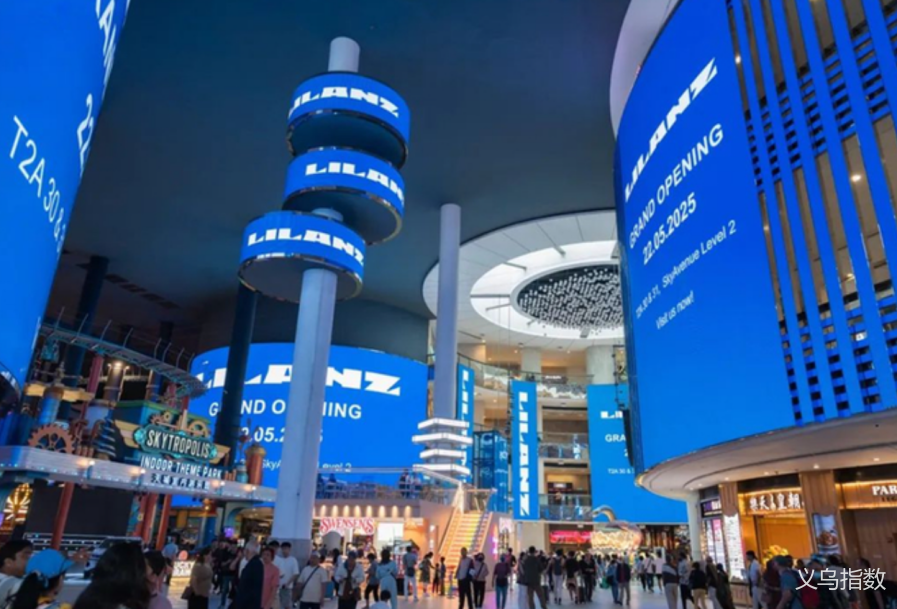
Image source: Internet
01
Cross-border Expansion: From "Tightening Screws" to "Building Brands
Nowadays, Chinese enterprises' overseas expansion has moved from the early stage of "OEM" and "product volume growth" to a stage centered on "brand building". Its journey at sea is mainly divided into four stages:
The nascent period of brand going global: 1978-1999. After the reform and opening up, China promoted the export of its products through methods such as "processing with supplied materials" and "processing with supplied samples".
The exploration period of brand going global: From 2000 to 2007, China mainly exported traditional industrial products. During this period, rapidly growing Chinese enterprises such as Lenovo and Haier emerged, and they advanced their internationalization strategies through mergers and acquisitions and investments.
The growth period of brand going global: From 2008 to 2019, traditional export methods shrank somewhat, and cross-border e-commerce and other export methods emerged, initiating online and digital overseas promotion.
Brand overseas Expansion Innovation Period: Since 2020, Chinese brands have adopted various emerging marketing methods in their overseas expansion process, such as social media strategies, localized operations, content marketing, and omni-channel marketing (integration of online and offline), with enterprises paying more attention to brand building.

Image source: Internet
02
Going global is not simply about copying; the core pitfalls need to be avoided
Going global is never a smooth path to success simply by copying and pasting the domestic model. Even industry giants will encounter different traps in different markets.
Trap One: Emphasizing the operation mode, high investment and high risk
The essence of the heavy operation model is "exchanging short-term investment for long-term market position". Many enterprises, when going global, carry the thinking of the domestic "heavy asset operation" model, attempting to establish direct control over overseas markets by rapidly replicating the domestic model, thereby obtaining long-term and stable market penetration and brand barriers.
However, this will lead many enterprises into the trap of "aggressive expansion", which is characterized by "high threshold, long payback period, complex management and concentrated risks".
Take the overseas expansion of a certain food delivery platform as an example. This platform is undoubtedly a giant in the local life service sector in China, but its attempts to go global have failed to fully replicate its success in the domestic market.
In 2016, the platform's overseas expansion was still in a cautious exploration stage. It initially adopted a relatively cautious strategy, understanding the local market by investing in overseas local platforms such as local technology platforms in Indonesia, and did not directly operate the business.
In 2018, after accumulating a certain amount of knowledge, the platform decided to get involved itself, and its first stop was Hong Kong, China, which has a similar culture. By leveraging its core takeout business and replicating its proven model of "heavy subsidies, strong ground promotion, and rapid expansion" in the Chinese mainland, it is attempting to quickly capture the market. However, as a latecomer to the local market, the platform underestimated the barriers and user inertia of local giants. This heavy operation model has plunged the platform into a high-cost and continuous war of attrition. This ultimately led to a significant slowdown in its overall overseas expansion pace and a marked contraction in other overseas expansion plans. The setbacks in the company's overseas expansion are essentially a typical manifestation of the predicament faced by "heavy model" platform-based businesses in going global.

Image source: Internet
Trap Two: Blindly copying models, Beware of the "comfort zone"
Viewing past experiences as a "universal template" has overlooked the fundamental differences among various markets in terms of scale, user habits and competitive landscape. For instance, when enterprises go global and choose overseas Chinese markets with similar user profiles to those in China, it may seem like they have entered a "comfort zone", but in fact, it conceals deeper risks.
Take a well-known platform selling discounted brand goods as an example. In 2018, based on the successful experience of domestic social e-commerce, the platform launched its second overseas expansion project, attempting to directly transplant the mature domestic gameplay to the overseas market and promote its international layout within the familiar "comfort zone". The project's official account for the Singapore market was launched first in September, and the North American account followed suit in October, clearly targeting overseas Chinese in both regions.
The project model is based on the wechat ecosystem, with the platform providing millions of goods sources, as well as logistics, after-sales and other services. Partners only need to select products and push them to their friends for distribution to earn high commissions.
However, this attempt to go to sea was quickly blocked. From the demand side, although wechat has hundreds of millions of overseas users, its penetration in shopping scenarios is seriously insufficient. The unsmooth payment chain leads to a limited actual consumer group and a low ceiling. From the supply side, the sources of goods are mainly Chinese brands, which lack competitiveness in overseas markets where international brands are mature. Coupled with the difficulty in recruiting partners, the continuous slump in social sharing and traffic conversion, and other factors, the project was suddenly announced to be shut down in December, less than two months after the official announcement of the North American project.
This brief attempt to go global serves as a warning: Going global is never a simple extension of domestic successful experiences. Verifying the real market size and demand is far more important than relying on cultural affinity.

Image source: Internet
Trap Three: Brand cultural resonance fails overseas
The emotional value of a brand in its domestic market is often rooted in specific social sentiments and collective memory. If these cultural codes are not deeply "translated" and directly transplanted to overseas markets, it will lead to the brand story being difficult to resonate with.
Take a well-known domestic beauty brand enterprise as an example. This enterprise is a model of the rise of Chinese beauty brands in the new consumption wave, but its overseas expansion has not been smooth sailing. It is a typical case of "high starting point and high market gap".
In 2019, the brand began to show signs of going global: A Japanese beauty blogger's overseas shopping review of its beauty product line with strong Oriental culture received 3.7 million views and topped the hot search list, unexpectedly igniting overseas popularity. The brand immediately planned to launch an international layout.
In March 2021, the brand made a high-profile announcement of its entry into Amazon Japan. Many of its star products featuring Oriental cultural elements were priced at over 6,000 yen and once ranked among the top three in sales. This is regarded as a landmark event marking its overseas expansion. Subsequently, the brand gradually entered markets in Europe, America, Southeast Asia and other regions through channels such as Amazon and independent websites. Its pricing was on par with that of international top brands, establishing an image of high-end Oriental makeup.
Despite the brand's grand start, it soon encountered a development bottleneck and failed to replicate its phenomenon-level success in the domestic market in overseas markets. Its untranslated Eastern aesthetics pose a relatively high cultural understanding threshold for overseas consumers, making it difficult for them to grasp the cultural stories and emotional values behind them. Therefore, it is hard for them to recognize its high pricing comparable to that of international luxury goods. The brand story fails to resonate with people, which leads to low competitiveness of the products overseas.
The overseas expansion case of this enterprise is essentially the core challenge of how "cultural brands" can achieve "global expression", providing a warning for all Chinese consumer brands that hope to reach the high-end market by relying on cultural characteristics.

The Song brocade that embodies Eastern aesthetics. Image source: Internet
Trap Four: Localized management and operation remain superficial
Over-reliance on the headquarters' command, failure to grant sufficient autonomy to local teams, and failure to attract local core talents into the decision-making level will result in the inability to achieve true "localization of decision-making", which will lead to a sluggish market response and an inability to truly reach local consumers.
In 2004, a globally renowned e-commerce platform entered China by acquiring Joyo.com. Initially, it dominated the B2C market by relying on the book category.
However, after 2010, in the face of the encirclement from leading domestic e-commerce enterprises, the platform exposed its shortcomings in localization. On the one hand, the CEO of its China region has always been a foreign executive lacking practical experience in local e-commerce. The local team has not been granted substantive decision-making power. Even for details like modifying website banners, approval from the overseas headquarters is required. On the other hand, the platform's insistence on a globally unified UI design, prioritizing credit card payments, and marketing focus on "Black Friday" and other operational methods were out of step with the rhythm of the Chinese market. As a result, its market share dropped from a peak of 15% to less than 1% in 2019, and it eventually announced its withdrawal from the Chinese B2C market in the same year.

Image source: Internet
Trap Five: Having "quality" but no "brand", the product lacks strength and gets stuck in the quagmire of low prices
After opening up the market by relying on cost performance, if it fails to upgrade from "selling products" to "building a brand" in time, the brand image will be anchored at the low price level. Once a product fails to continuously improve or quality issues arise, the brand will lose trust and competitiveness, and eventually can only fall into a vicious cycle of low-price competition.
In the 1990s, Chinese fuel-powered motorcycles quickly entered the Southeast Asian market by virtue of their price advantage (with some products priced at only a quarter of those of Japanese brands), and their market share once surpassed that of their rivals. However, the enterprise failed to transform its short-term market advantages into long-term brand value and instead fell into a vicious circle of internal price wars. To maintain low prices, quality control was lax, leading to a sharp decline in product quality and reputation. The related brands gradually became synonymous with low quality and low prices, and the market dominance was once again ceded to Japanese brands.
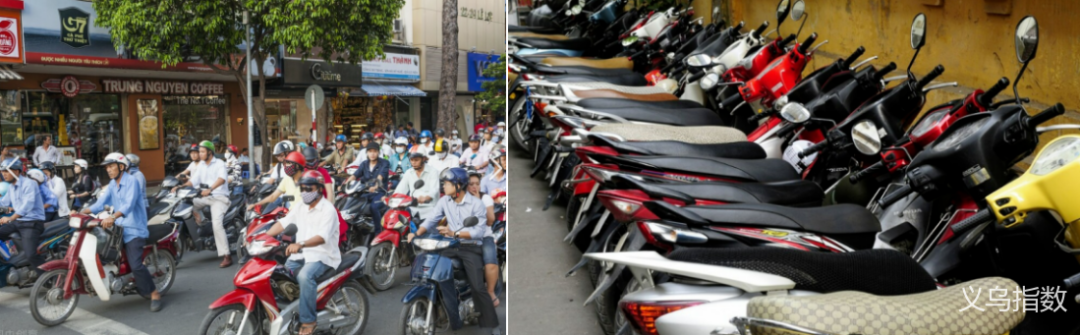
Vietnam, known as the "Kingdom of Motorcycles", source: Internet
Trap 6: Strategic short-sightedness and lack of intellectual property protection
Strategic short-sightedness and neglecting the protection of intellectual property rights such as trademarks in the target market may lead to the initial investment being wasted for others. For instance, trademark registration and a risk prevention and control system must be established in advance rather than as a temporary measure for rights protection.
In 2022, a "knockoff" store with an appearance strikingly similar to that of a well-known domestic coffee brand emerged in Thailand. The company sued the Thai Royal 50R Group behind it for trademark infringement but unexpectedly lost the case and was ordered to pay 10 billion Thai baht (approximately 2 billion yuan) in compensation. It was not until 2025 that the law confirmed that the enterprise had prior rights to the trademark and logo that the case reversed and the enterprise won the lawsuit. This case reveals the predicament of the company's overseas expansion: the brand's momentum in the Chinese market failed to translate into legal assets in overseas markets. The Thai company took the lead in registering a trademark and Logo highly similar to it, resulting in a passive situation of "the fake suing the genuine". The brand accumulation in the early stage instead led to traffic diversion for the counterfeit stores. Eventually, it took a huge amount of effort to successfully protect its rights.
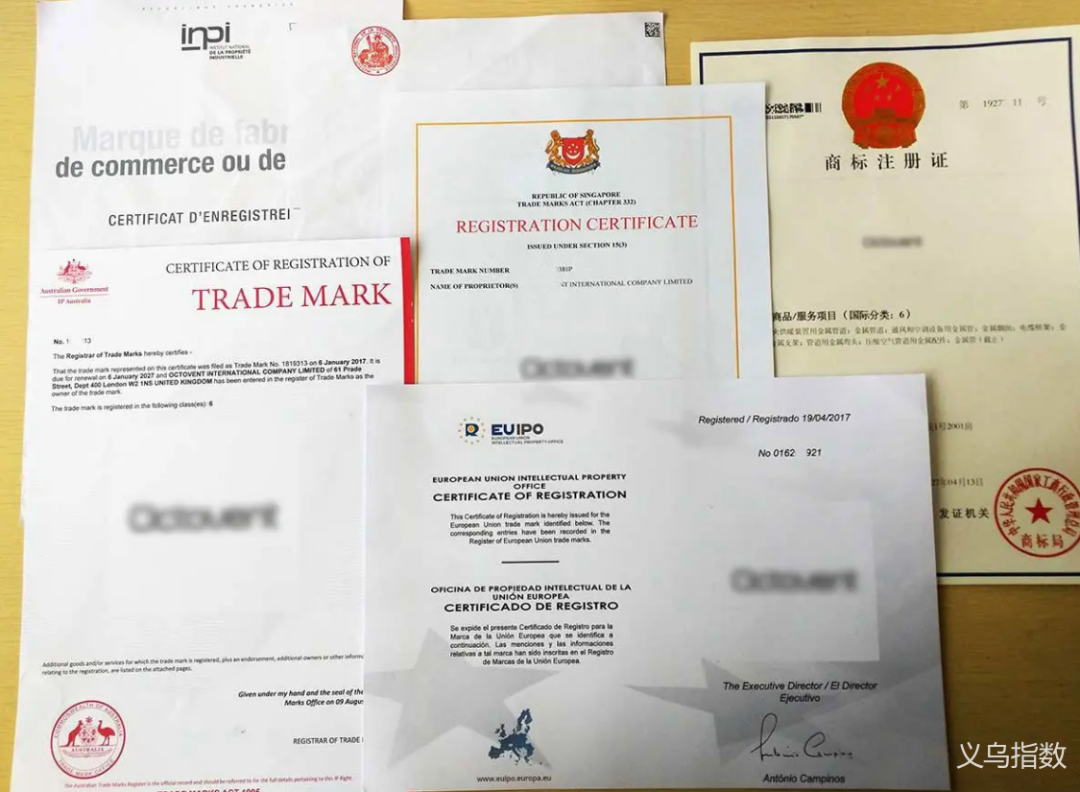
The source of the trademark registration-related documents: Internet
Going global is not merely about market expansion, but rather the overall transformation and upgrading of an enterprise. For Yiwu, which is dominated by small and medium-sized enterprises, on the road of brand going global, it can fully refer to the experiences and lessons learned by predecessors with real money, and avoid common traps by "copying homework".
—— The content of this article is translated by Al ——
 My favorites